
Contents
- The Wine Was Local. The Scam Was International.
- 1. Oversharing Turns You Into Scam Bait
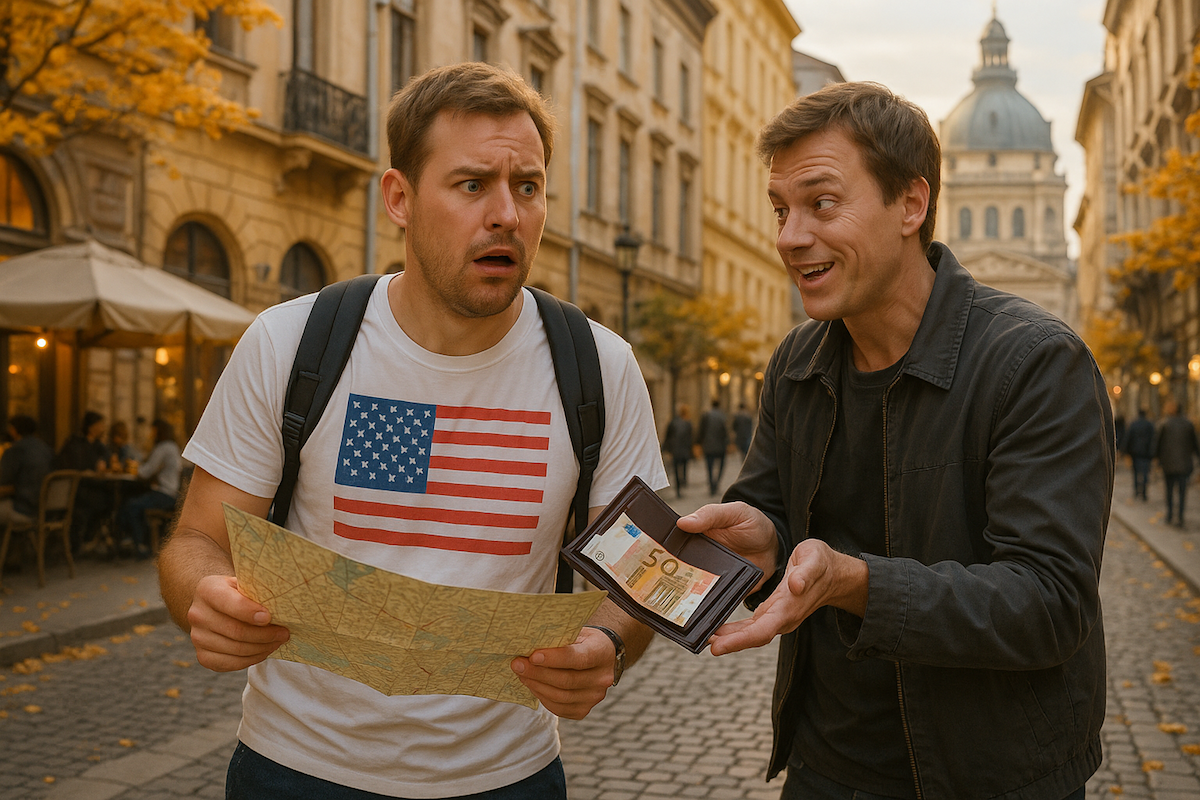
- 2. Wearing American Logos Is a Walking Dollar Sign
- 3. Too Trusting of “Friendly” Strangers
- 4. Not Asking Prices Beforehand Can Cost You Big
- 5. Assuming Everyone Tips Can Backfire Hard
- 6. Saying Yes Too Quickly Feeds the Hustle
- 7. Trying to Be Polite Instead of Saying No
- 8. Looking Lost Makes You a Moving Target
- 9. Flashing Cash or Tech Is Asking for Trouble
- 10. Thinking “It Won’t Happen to Me” Is the Biggest Mistake of All
- Don’t Be the Easy Mark Again
The Wine Was Local. The Scam Was International.
You’re Not Getting Scammed Because You’re American. You’re Getting Scammed Because You’re Obvious
It happened in Tbilisi, just off Rustaveli Avenue, on one of those mild Georgian evenings where the wine flows, the cobblestones glow, and you feel like a character in a travel blog with too much confidence and not enough street smarts.
I was approached by a guy who claimed he wanted to practice his English. “We Georgians love Americans,” he said, with a smile that should’ve set off alarms louder than a Kyiv tram screeching into a curve.
But I’d just finished a long workweek teaching online, my guard was down, and my inner New Englander was up.
He mentioned a “hidden wine bar only locals know.”
Of course he did… and of course I followed.
The place was dark. Intimate. Weirdly empty for a Friday night. He ordered for us, raved about the vintage, toasted to “new friendships.”
Then he excused himself to the bathroom.
He never came back.
I got the bill: 257 lari. I had two sips and a handful of stale nuts.
I sat there, staring at the check like it had personally insulted my mother. The staff didn’t blink. This wasn’t their first rodeo.
It wasn’t mine either. Because if I’m being honest, I’d made similar mistakes in Bulgaria, Spain, and once in a back alley café in Kyiv that served borscht colder than the server’s attitude.
I wasn’t unlucky. I was predictable, and in the world of travel scams, predictability is currency.
Turns out, it’s not just what you do abroad that makes you a target. It’s how you do it.
Oh, and if you’re American, chances are you’ve already been sized up before your passport even gets stamped.
In this article, I’m going to walk you through 10 painfully common American travel habits that don’t just scream “tourist”… they whisper “easy money” to every scammer from Tbilisi to Tijuana.
Let’s get into it because most scams aren’t that clever.
They’re just waiting for someone who forgot to Scam-Proof themselves.
1. Oversharing Turns You Into Scam Bait
Back when I first arrived in Romania, I thought chatting with locals at cafes was the best way to blend in.
Turns out, it was the fastest way to broadcast that I had no idea where I was, where I was going, or how not to get fleeced.
Telling a curious “new friend” that you’ve just arrived, don’t know anyone, and haven’t even booked your accommodations yet is like giving them a cheat code.
Suddenly, they know you’re alone, unrooted, and likely disoriented.
Great for building some travel adventure stories to retell back home or write about. Terrible for avoiding scams.
Scam-Proof Yourself: Keep the mystery. The less you reveal, the harder you are to target.
2. Wearing American Logos Is a Walking Dollar Sign
In Kyiv, during my teaching days, one gal showed up daily in her Harvard hoodie. She didn’t go to Harvard. She just thought it looked cool.
By week two, she’d had her phone stolen on the Metro and been quoted triple the price for a SIM card by some guy on the street selling them out of cardboard box.
People aren’t stupid. That Yankee hat, that GAP sweatshirt, those squeaky-clean Nikes? They scream, “I have money, I have no clue, and I just got off the plane.”
Scam-Proof Yourself: Dress down. Better yet, dress local. Blend in.
You’re not there to represent your alma mater, especially a fake one… you’re there to not get ripped off.
3. Too Trusting of “Friendly” Strangers
In Tbilisi, a guy told me he wanted to practice English. Thirty minutes and one vanishing act later, I was left holding a wine bill that could’ve fed me for a week.
Friendly strangers aren’t always the problem.
But when they’re the first ones to approach you, especially near train stations, tourist spots or major landmarks, start asking yourself why.
I saw this scam coming from a mile away the second time and wrote about it here, “Think You’re Brad Pitt, Passport Bro? Think Again! The $1000 Brad Pitt Scam!”
Scam-Proof Yourself: Kindness is free. But trust should be earned. Slowly.
4. Not Asking Prices Beforehand Can Cost You Big
A friend I met in Spain, a fellow pilgrim on the Camino, once ordered a seafood platter in Santiago without checking the price.
It came out on a gold-rimmed plate with a price tag that could’ve covered two nights at a decent guesthouse.
If there’s no menu, no meter, or no clear price tag, it’s not “authentic.” It’s a setup.
Scam-Proof Yourself: Ask first. Confirm. Get it in writing if you have to. The only surprise you want with food is flavor.**
5. Assuming Everyone Tips Can Backfire Hard
In France, I tipped a barman in Dieppe and got a look like I’d just handed him a live hamster.
In Georgia, I tipped and it was welcomed, but in the kind of way that made me realize I’d now branded myself “the guy who always tips.”
In some places, tipping is expected. In others, it’s weird.
But what’s universal is that tipping too early, too often, or too much can turn helpful people into opportunists.
Scam-Proof Yourself: Tip when it makes sense. Not out of habit.
6. Saying Yes Too Quickly Feeds the Hustle
A traveler I met in Kyiv told me about a “free walking tour” she had in Romania that turned out to involve very little walking and ended inside someone’s cousin’s “art gallery” off a main square. The door locked behind them.
Nobody pulled a knife, but they did leave with a hand-painted spoon they didn’t want, didn’t need, and definitely overpaid for.
Scammers rely on speed. The faster you say yes, the less time you have to notice what’s off.
Scam-Proof Yourself: If someone’s rushing you, pause. That pause could save your wallet.
7. Trying to Be Polite Instead of Saying No
In Kyiv, I once let a guy corner me into taking his “taxi” because I didn’t want to seem rude.
It was my first week in the city, I didn’t know my way around, couldn’t speak Russian, and had no clue what a fair price even looked like
He drove me two blocks and charged me the equivalent of a steak dinner.
Many “foreigners”, especially Americans, have a politeness reflex.
Scammers know this.
They’ll push until you feel like the rude one for walking away.
Scam-Proof Yourself: “No thanks” isn’t rude. It’s self-defense. Use it often.
8. Looking Lost Makes You a Moving Target
In Paris, I saw a tourist spinning in place with an open map, holding her phone like a confused squirrel.
She might as well have been holding a sign that said, “Please help me get mugged.”
We’ve all been lost.
But looking lost and looking vulnerable aren’t the same thing.
Duck into a shop. Sit down on a bench. Get your bearings in private.
Scam-Proof Yourself: The more confident you look, the fewer eyes you attract… for the wrong reasons.
9. Flashing Cash or Tech Is Asking for Trouble
I met a guy at a hostel in Italy back before the Euro, when people still walked around with enough Italian Lira to make their wallets look like bricks. He thought flashing a fat roll of it at the bar would impress a girl.
She wasn’t. But someone across the room definitely was. His backpack disappeared the next morning without a trace.
These days, it’s not just cash that gets attention. That iPhone in your hand catches eyes fast.
That portable drone isn’t impressing anyone either.
Except of course, that thief eyeing you from across the room or at that swanky outdoor café.
Scam-Proof Yourself: Keep your valuables hidden, your phone use minimal, and your cash stash split up.
10. Thinking “It Won’t Happen to Me” Is the Biggest Mistake of All
The first time I got scammed, I chalked it up to bad luck. The second time, I blamed the other person.
The third time, I realized the common denominator… was me.
Scams don’t always happen because you’re stupid. They happen because someone sees an opening.
Oh, and the more you travel, the more you realize how many of those opening habits are all yours.
Scam-Proof Yourself: Paranoia ruins trips. Vigilance protects them. Know the difference.
Don’t Be the Easy Mark Again
Here’s the part most people don’t want to admit: scammers aren’t magical.
They don’t pick you at random. They pick you because you give them a signal. For years, I was broadcasting that loud and clear.
It wasn’t until I started traveling with more awareness, and less ego, that the scams mostly stopped. Not completely, of course. This is real life, not some “rom-com”.
But now I can see them coming.
The more you travel, the better you get at spotting the setup.
Learn the signs, break those self-sabotaging habits, and Scam-Proof Yourself before your next story starts with, “I should’ve known better,” .
So what about you? Have you ever been scammed while traveling… or almost?
Was it your fault? Their hustle? Maybe a little of both?

David Peluchette is a Premium Ghostwriter/Travel and Tech Enthusiast. When David isn’t writing he enjoys traveling, learning new languages, fitness, hiking and going on long walks (did the 550 mile Camino de Santiago, not once but twice!), cooking, eating, reading and building niche websites with WordPress.