
Real Stories, Real Shock, And The Ego Checks I Learned Across Ukraine, Georgia, Albania, France, Thailand, And Beyond
Every country has rules.
The dangerous ones are the rules nobody explains.
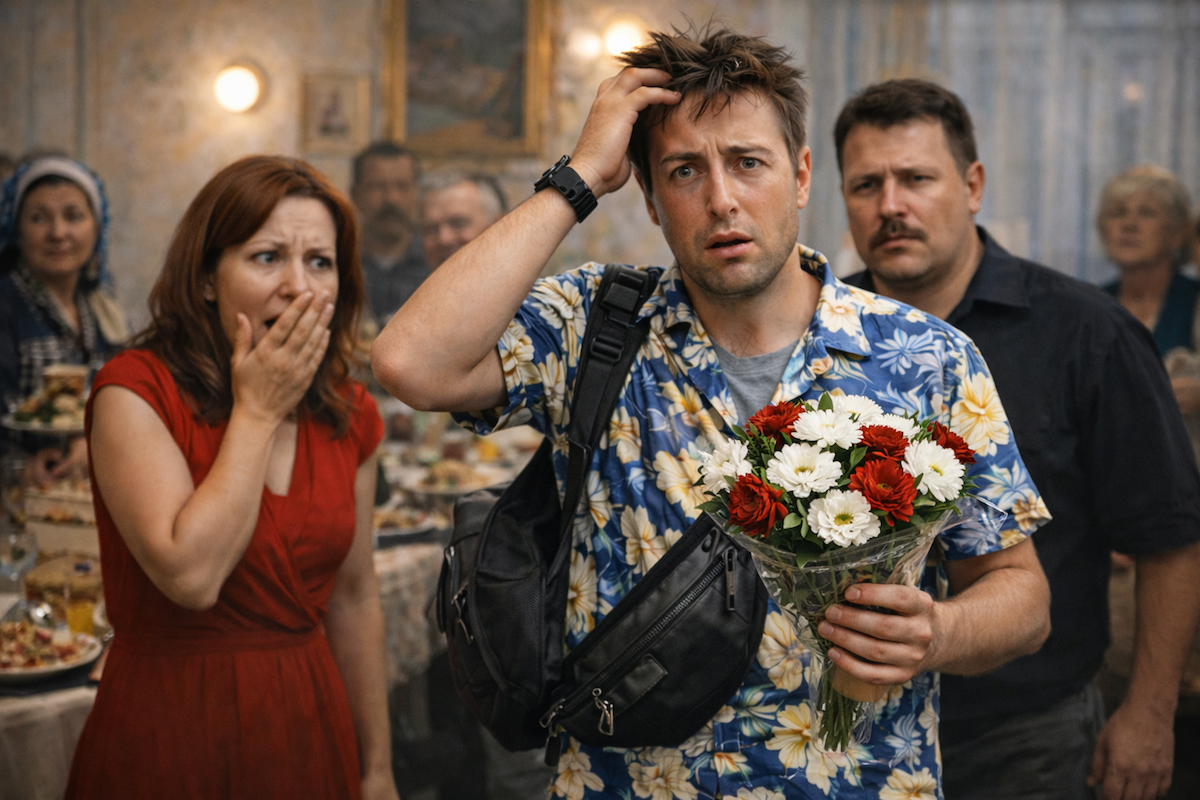
Kyiv. Late 1990s. I walk into a party feeling cultured, worldly, practically diplomatic. I brought flowers. Even number. Clean. Balanced. Sophisticated.
I hand them over and feel the room shift.
That’s when someone quietly informs me that in Ukraine, an even number of flowers is for funerals.
I hadn’t brought a gift. I’d brought a death wish.
No guidebook mentioned it. No expat blog warned me. Nobody pulled me aside and said, “Quick tip, don’t jinx the party.”
That was the moment I realized something humbling.
The real education abroad begins the second you break a rule you didn’t know existed.
After 20 years in Ukraine, 4 years in Georgia, and the past 3 years in Albania, I’ve had time to learn things the hard way.
I’ve also spent several months at a time over the years in France, Spain, Bulgaria, North Macedonia, and Greece.
Add to that weeks wandering through Thailand, Poland, Romania, Germany, Ireland, Mexico, the UK, Canada, and Italy, with a few others in between.
At this point, I’ve collected enough cultural misfires to write a survival manual.
Actually, I have. Check out, “Culturally Clueless“.
But, for now, here are just 9 of them.
If you think you’re culturally prepared, keep reading.
1. The Flowers That Accidentally Announced a Funeral in Kyiv
I went from confident international man of mystery to social liability in under ten seconds.
In Ukraine, flowers aren’t decoration. They’re coded. Odd numbers celebrate the living. Even numbers are for the dead.
I thought I was being, well… thoughtful. But, I was unknowingly signaling mourning.
In post Soviet cultures, symbolism carries weight.
History isn’t abstract.
It lives in rituals, gestures and numbers, especially odds & evens.
Cultural WTF: Before showing up to any social event abroad, learn the symbolic basics. Flowers. Colors. Numbers. Gifts. It takes five minutes of research to avoid five minutes of awkward silence.
Ego Check: Your version of polite isn’t universal.
2. The “What Do You Do?” Question That Shut Down a Table in 1999 Ukraine
In the U.S., asking someone what they do is an icebreaker.
In 1999 Kyiv, it felt like I’d asked for a tax return and a confession.
I asked a guy at dinner what he did for a living. He said, “Business.” I asked what kind. He said, “Just business.” Conversation over.
Post-Soviet instability made income sensitive. Work wasn’t cocktail chatter. Privacy wasn’t optional. It was protection.
I thought I was connecting. He thought I was digging.
Cultural WTF: Start with shared experiences. Ask about the city, the food, the music. Let people volunteer personal details.
Ego Check: Curiosity without context sounds like interrogation.
3. The Day Speaking English Got Me Stopped by Police in Kyiv
Early on, I was walking down the street speaking English with my girlfriend.
Within minutes, police stopped us and asked for my passport.
Foreign language equals visibility. Visibility equals scrutiny.
Carrying your passport wasn’t optional back then. Without it, you could be detained until someone brought proof of your registration.
Coming from the United States, I wasn’t used to authority feeling that direct.
Cultural WTF: Know how foreigners are perceived. Understand local ID laws. Blend in when it makes sense.
Ego Check: Freedom feels different depending on who defines it.
4. The Informal Taxi System That Charged Me the “Foreign Face” Rate
Before ride share apps, Kyiv had a DIY taxi system. You stood by the road, put out your hand, and negotiated through a car window.
My early fares were always higher than my Ukrainian friends’ fares.
Foreign face. Foreign price.
At first I was offended. Later I realized it was basic economics.
If you look like you can pay more, you probably will.
I saw the same pattern in Georgia, Mexico, and parts of Thailand where tourists cluster.
If you’re navigating your own cultural transition and want to look before you leap, I offer 1:1 Life-Abroad Advice Calls where we go over your specific situation without the romantic filters.
Cultural WTF: Ask locals the going rate before negotiating. Knowledge shifts leverage instantly.
Ego Check: There’s nothing like the marketplace to put you in… your place.
5. The International Women’s Day Toasts That Nearly Destroyed My Liver
March 8 in Ukraine is a big deal.
Men carry roses like it’s a national obligation. Champagne flows. Vodka follows. All washed down with pickled everything, Salo and blackbread.
I tried pacing myself. That didn’t work.
Refusing a toast felt like disrespect.
In fact, “you don’t respect me,” was the exact response I got when I tried.
Participation mattered more than moderation.
Ukraine has its own versions of high intensity celebration. Cultural rituals aren’t spectator sports.
Cultural WTF: Observe how locals participate before choosing your level of engagement. Respect sometimes means stepping in. Sometimes, it means knowing when to bow out gracefully… and sometimes it can literally require a doctor’s note.
Ego Check: Celebration is communal, not individual.
6. The Mayonnaise Pizza That Shook My Culinary Confidence
My very first trip to Kyiv was in 1998. Looking for something familiar to eat, I ordered a pizza. International, safe… or so I thought.
Then it arrives, with mayonnaise on top!
Food shock hits deep because food feels personal.
Over time I realized every country has its own flavor logic. Thailand balances sweet and spicy differently. Albania builds meals around meat. France stretches dinner into an event.
What feels wrong at first often makes perfect sense locally.
Cultural WTF: Taste before judging. Ask why. Curiosity opens doors faster than criticism. Ask Anthony Bourdain… RIP.
Ego Check: Food is edible history.
7. The Gesture in the UK That Changed the Mood Instantly
In a typical British pub, I used a casual American hand gesture to order 2 pints.
The reaction was subtle but unmistakable. The tone shifted.
Gestures carry local meaning.
Some are harmless at home and loaded elsewhere.
I’ve written before about how small talk can misfire abroad. Body language is even riskier because you don’t hear yourself doing it.
Cultural WTF: Watch how locals move before you perform. Mirror first. Express second.
Ego Check: Silence and posture speak fluently.
8. The Personal Space Shock That Rewired My Instincts in Georgia
In Tbilisi, I was at a bar when the bartender leaned in so close I could feel his breath.
My reflex was to step back.
He stepped forward.
We repeated this dance until I realized the issue wasn’t him. It was my American comfort zone.
On metros in Kyiv, empty seats didn’t guarantee personal space. Proximity wasn’t aggression. It was normal.
In the United States, personal space feels like a right.
In much of Europe and Asia, closeness feels efficient.
Cultural WTF: Notice distance norms before reacting. Adjust gradually instead of retreating automatically.
Ego Check: Space is cultural, not universal.
9. The Condiment Shock That Exposed My American Entitlement
The first time it happened was in Poland. I ordered food. It arrived. I asked for ketchup.
The waiter nodded and added it to the bill.
I thought there had been a mistake.
There wasn’t.
Then I asked for a refill on my drink.
He looked at me like I had just requested a small inheritance.
Growing up in the United States, condiments are free. Refills are practically a constitutional right.
You don’t even think about it.
In much of Europe, that logic doesn’t exist. You pay for what you order. Period.
I remember thinking, “This is outrageous.”
Then I realized what was actually outrageous.
I was assuming my cultural norms were universal.
Free refills are not a human right. They’re a business model.
Cultural WTF: Never assume service culture works like it does at home. Ask what’s included before you order, especially in restaurants.
Ego Check: What feels normal to you might look like entitlement somewhere else.
What These 9 Moments Really Mean
You can read every expat blog and newsletter online.
You can memorize every checklist.
Real education begins the first time you break a rule you didn’t know existed.
The bouquet in Kyiv wasn’t about flowers. It was about humility. The awkward job question wasn’t about curiosity. It was about context.
If you’re considering moving abroad, understand this.
The biggest risks aren’t financial. They’re cultural.
Culture rarely introduces itself politely.
Before you sell everything or book that one way ticket, check your assumptions.
In my 1:1 Life-Abroad Advice Calls, we stress test your expectations against nearly three decades of real world experience.
No fantasy. No fear. No influencer heart-shaped cappuccino tops.
Just the real deal.
Sometimes the smartest move isn’t changing countries. It’s changing your mindset first.
Which moment made you realize you weren’t home anymore?
Share it in the comments. Someone else is about to walk into a party with the wrong bouquet.
For more unfiltered expat stories, life abroad practical guides, and personal 1:1 expat life consulting options with me, visit Expats Planet.

David Peluchette is a Premium Ghostwriter/Travel and Tech Enthusiast. When David isn’t writing he enjoys traveling, learning new languages, fitness, hiking and going on long walks (did the 550 mile Camino de Santiago, not once but twice!), cooking, eating, reading and building niche websites with WordPress.