
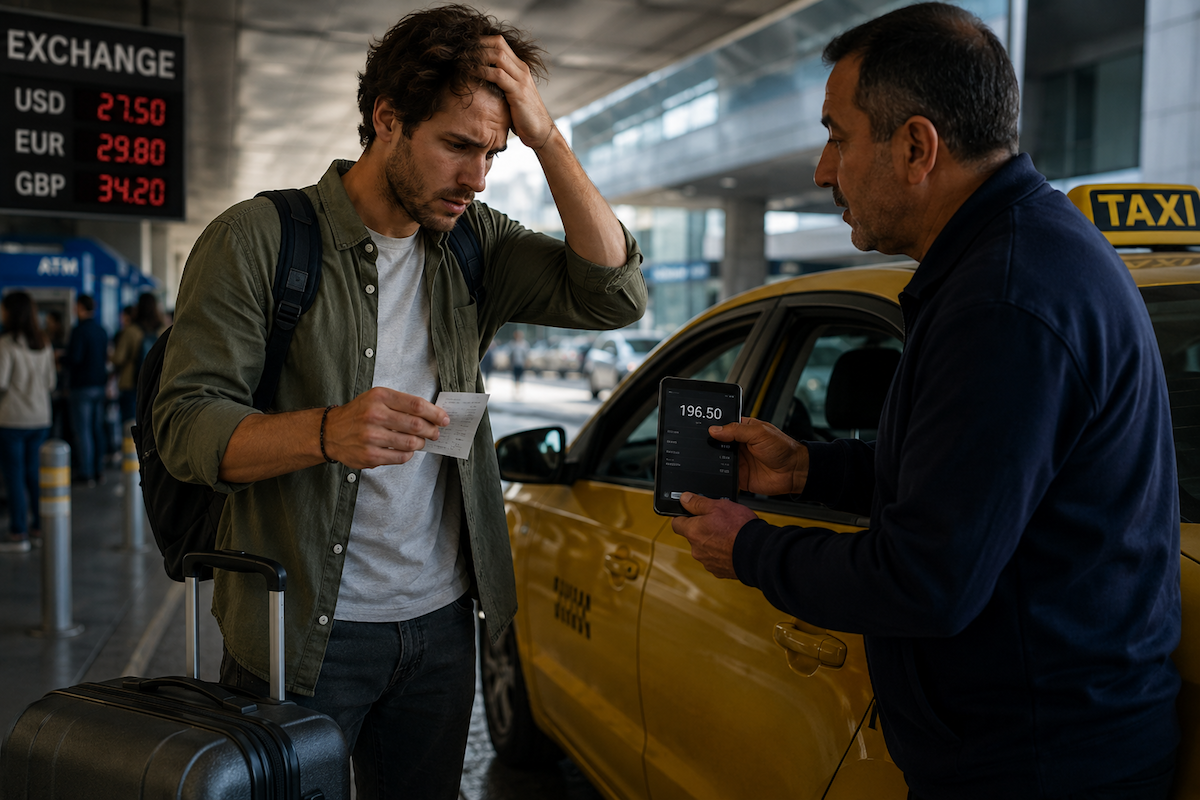
How Travelers Get Ripped Off Abroad Without Realizing It Until Later
The most expensive travel mistakes I’ve made abroad usually started with me being too tired to question something stupid.
Convenience abroad is seductive right before it screws you.
I’ve talked myself into some absolutely ridiculous decisions overseas because I was tired, sweaty, hungry, jet lagged, or just too psychologically spent making decisions for the day.
A taxi driver in Kyiv smiling a little too confidently at the airport. A “good enough” apartment in Athens with reviews that quietly screamed “run.”
Each one felt harmless in the moment, which is exactly how those decisions get you.
Each time, I told myself the same thing:
“It’ll be fine.”
That sentence has emptied my wallet faster than overpriced airport beers and foreign ATM fees combined.
The worst part is that nothing feels expensive at first. That’s how these mistakes get you.
- The taxi ride only costs “a little more.”
- The hotel is only “slightly worse.”
- The exchange booth only takes “a small commission, plus a lousy exchange rate.”
- The influencer tip only wastes “one afternoon.”
Then suddenly your entire trip starts feeling heavier and more irritating than it should.
I remember arriving in Poland years ago after a brutal overnight train journey, too mentally fried to think clearly. Every shortcut I took that night felt small in the moment.
By the end of the week, every single one of them had sent me the bill later.
1. “The Taxi Driver Seems Nice… He’ll Probably Charge Fair”
I still remember stumbling out of Tbilisi’s International Airport years ago at 4am, looking like a man who had lost a fight with sleep deprivation.
My brain had stopped functioning somewhere over the Atlantic.
A smiling taxi driver spotted me instantly, grabbed my suitcase, and confidently announced a price that sounded vaguely reasonable in my exhausted state.
Three minutes into the ride, I realized two things.
First, the meter was mysteriously “broken.”
Second, we were apparently taking the scenic tour of every dimly lit Soviet apartment block in Tbilisi before reaching my destination.
By the time I got to my apartment, I was sweaty, irritated, and significantly poorer than I should’ve been.
The annoying part wasn’t even the money.
It was realizing that this guy understood exactly how tired and disoriented I was before I understood the situation myself.
That’s how a lot of travel mistakes work abroad.
Nobody forces you into them.
You walk willingly into them because convenience feels emotionally cheaper than slowing down and thinking clearly.
The Real Bill: Exhausted travelers pay extra just to avoid friction.
2. “The Airbnb Has Mixed Reviews… But It’ll Probably Be Fine”
I once booked a “charming authentic apartment” in Athens because the photos looked decent enough and the price looked suspiciously amazing.
Sure, a few reviews mentioned noise, weird smells, and an “interesting neighborhood,” but people online complain about everything.
Then I arrived close to midnight dragging my suitcase uphill through streets that looked progressively less welcoming every ten minutes.
The WiFi barely worked. The shower sprayed water with the confidence of a dying garden hose.
A nightclub somewhere nearby started vibrating the walls at 2 a.m.
Transportation into the city center became a daily psychological battle I immediately regretted.
Funny thing is that bad accommodations don’t just affect where you sleep.
They quietly affect your mood, patience, energy, and decision making.
Suddenly you’re eating worse, sleeping worse, spending more money escaping the area, and getting irritated by things that normally wouldn’t bother you.
Travelers massively underestimate how quickly environment affects psychology abroad.
The Real Bill: One bad booking can quietly poison an entire trip.
3. “I’ll Just Use My Credit Card Everywhere”
A fellow traveler I met in Saranda once laughed at me for carrying backup cash.
“Bro, it’s Europe,” he said confidently while waving his credit card around like diplomatic immunity.
Two days later I ran into him sweating outside an ATM that had apparently eaten his card somewhere near the Albanian Riviera.
I’ve had my own version of that panic too. Standing in a café in Sofia while my card kept getting declined for reasons my bank refused to explain until approximately six business years later.
It’s amazing how fast your confidence disappears when your money stops moving.
No cash. Weak signal. Frozen banking app. Tiny line of irritated locals forming behind you.
That’s the moment travelers realize how dependent they actually are on invisible systems working correctly.
People assume payment systems function universally because they work smoothly at home.
Abroad, those assumptions can collapse very quickly.
What makes it stressful isn’t just the inconvenience. It’s how fast your flexibility disappears once access to money becomes unstable.
The Real Bill: Convenience disappears fast when your money stops moving.
4. “I’m Sure The ATM Fee Isn’t That Bad”
Travel has this magical ability to make terrible financial decisions feel emotionally reasonable.
One airport ATM fee in Athens? Fine.
One overpriced taxi near the airport in Thailand? Whatever.
One terrible exchange rate in a tourist district in Kraków? No big deal.
One “authentic local experience” that somehow costs more than dinner back home? Why not.
Then your bank statement arrives looking like it survived a small financial war.
Tourist economies are built around tiny convenience decisions that don’t feel expensive individually.
- Dynamic currency conversion.
- Random withdrawal charges.
- “Tourist menu” pricing.
- Shortchanging waiters.
- Convenience stores charging double because they know tired travelers won’t walk farther.
The dangerous part is that cheap destinations create false confidence.
People go somewhere affordable and mentally stop paying attention because every individual expense feels relatively small.
That’s exactly how the money leaks start.
By the end of the trip, you’re wondering how a “cheap” vacation somehow cost the same as a minor medical procedure in America.
The Real Bill: Most travel costs hide inside convenience under the guise of a “cheap” destination.
5. “That Street Food Looks Safe Enough”
I once ate street food in Bangkok that smelled so incredible I would’ve ignored warning labels from the United Nations.
Locals were lined up. The wok was sizzling. The travel vloggers swore it was “life changing.”
Technically, they were right.
About six hours later, I was lying in my hotel room bargaining with God, my digestive system, and every life choice that led me to that noodle cart.
Getting sick abroad hits differently because everything becomes harder simultaneously.
Finding medicine suddenly feels like a side quest designed by a sadistic video game developer.
Language barriers become ten times more annoying when you’re dehydrated and sweating through your shirt.
What travelers often underestimate is the emotional isolation of being sick far from home.
Even small health problems abroad can make you feel weirdly vulnerable and mentally exhausted.
The issue usually isn’t the illness itself.
It’s realizing how quickly your confidence disappears once your body stops cooperating.
The Real Bill: Getting sick abroad costs far more than money.
6. “The Influencer Swore This Place Was Paradise… Then Reality Sent The Bill”
I’ve fallen for travel influencer nonsense more times than I’d like to admit.
You watch a YouTube video showing empty beaches in Greece, smiling locals in Tbilisi, or some influencer casually sipping cocktails in a “hidden gem” café in Albania that apparently nobody knows about except the other twelve million people who watched the video.
Then reality arrives swinging a baseball bat.
The “hidden gem” is packed with tourists taking identical Instagram photos.
Prices magically triple once they hear your accent.
Transportation becomes complete chaos the moment you leave the carefully edited camera angles.
Travel influencers rarely lie directly.
What they do is edit out friction.
Nobody films themselves arguing with a taxi driver in the rain.
Nobody uploads the part where they got lost, overpaid, exhausted, sunburned, dehydrated, and emotionally drained trying to locate the “secret beach” from TikTok.
That’s the trap.
You think you researched the destination.
What you actually researched was somebody else’s heavily edited version of the destination.
The Real Bill: Influencer advice gets expensive when entertainment starts replacing preparation.
7. “I’ll Figure It Out As I Go”
At first, improvising abroad feels adventurous.
It’s exciting wandering around unfamiliar streets in France or hopping random buses in Romania pretending you’re the main character in some artsy European film or spy thriller.
Then accumulated friction starts quietly punching holes in your mood.
- Bad sleep.
- ATM problems.
- Transportation confusion.
- Overpriced meals.
- Tiny misunderstandings.
- Constant low level uncertainty.
Every small issue feels manageable individually, but together they slowly drain your patience, judgment, and energy.
That’s what most people misunderstand about travel mistakes. Usually it isn’t one catastrophic disaster that ruins the experience.
It’s accumulation.
The wrong hotel affects your sleep. Bad sleep affects your decisions. Poor decisions create stress. Stress makes you impatient. Impatience creates more bad decisions.
By the end of the trip, you’re screaming into Google Maps like it personally attacked your family.
The Real Bill: Most expensive travel mistakes start long before the obvious problem appears.
The Moment Travelers Realize “It’ll Be Fine” Wasn’t Fine
“It’ll be fine” sounds harmless because most expensive travel mistakes don’t feel dangerous in the beginning.
They feel convenient.
That’s what makes them expensive later.
People say that sentence when they’re tired, overwhelmed, emotionally committed, or simply too exhausted to slow down and think clearly anymore.
- One shortcut here.
- One rushed decision there.
- One weird feeling ignored because nobody wants to ruin the mood on vacation.
- One “small” compromise that somehow becomes the story you tell later.
That friction starts adding up.
The money leaks out, the patience disappears, and suddently the whole thing starts feeling less like a vacation and more like an unpaid internship in bad decision making.
That’s the part most travel content skips entirely.
Traveling abroad for a few weeks is one thing.
Living abroad longer term is where those small misunderstandings start becoming much more expensive psychologically, financially, and emotionally.
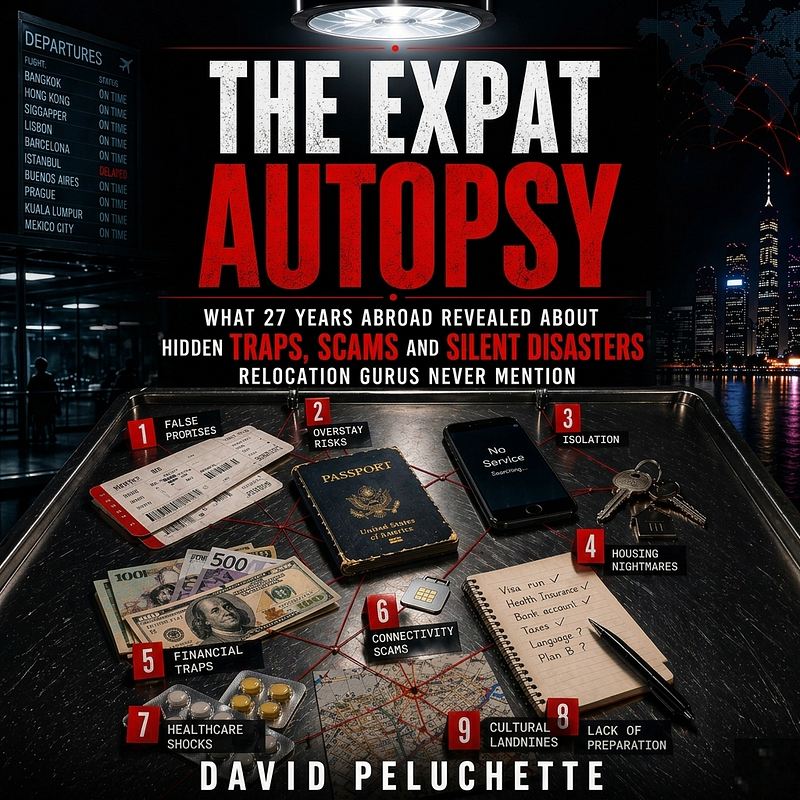
That’s the deeper territory explored inside The Expat Autopsy. The hidden systems, quiet dependencies, and slow building problems most people don’t notice until they’ve already committed to life overseas.
What’s the biggest travel mistake you’ve ever made because you told yourself, “It’ll be fine”?
The Expat Autopsy ($47)

David Peluchette is a Premium Ghostwriter/Travel and Tech Enthusiast. When David isn’t writing he enjoys traveling, learning new languages, fitness, hiking and going on long walks (did the 550 mile Camino de Santiago, not once but twice!), cooking, eating, reading and building niche websites with WordPress.