
Contents
- What You Carry Inside Always Comes With You
- 1. The Fear of Looking Stupid
- 2. The Need to Be “Productive” All the Time
- 3. The Fantasy That Travel Will Fix Your Life
- 4. The Habit of Overplanning Everything
- 5. The Anxiety of Being Judged
- 6. The Shame of Being Lost (Literally and Metaphorically)
- 7. The Belief That You’re “Behind” in Life
- Leave the Real Baggage at Home
What You Carry Inside Always Comes With You
Most People Pack Light but Still Carry the One Thing That Wrecks the Entire Trip
What nearly ruined my trip to Ireland wasn’t a delayed flight or lost luggage.
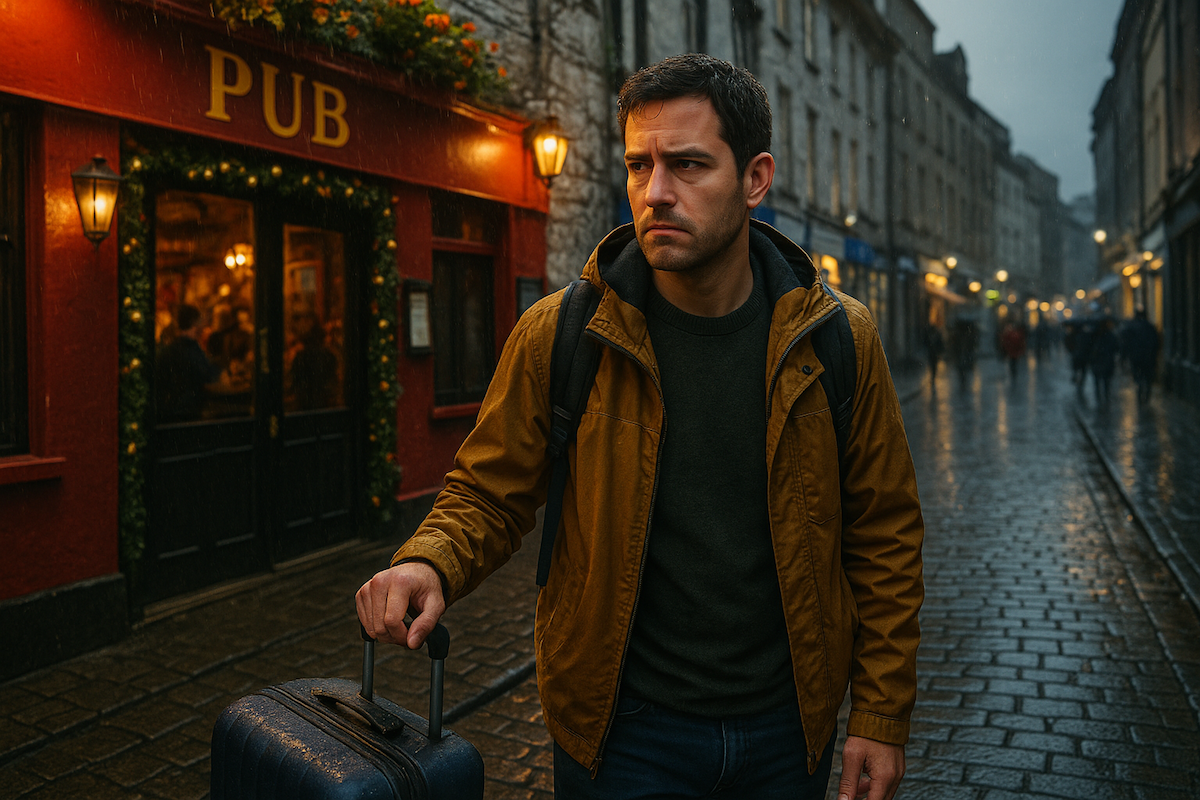
It was me, standing in a drizzle outside a pub in Galway, silently fuming because things weren’t going “according to plan.”
The plan, by the way, included watching the sunset from a cliff that apparently doesn’t exist on rainy Tuesdays in November among the tourist traps in central Galway.
Fortunately, I found that special “Cliff” further south along the Cliffs of Moher.
I used to pack for control.
- Backup chargers.
- Portable door locks.
- Three different kinds of adapters.
- Portable folding iron.
But none of it prepared me for what actually derailed most of my trips:
Insecurity, anxiety, and the low-key panic that I wasn’t doing it all “right.”
In Paris, I caught myself snapping photos of a view I wasn’t even looking at.
In Poland, I stressed about the timing of my next connection while sitting in a café with the best pierogi I’ve ever had.
I was everywhere except in the moment.
After years of travel across Ukraine, Spain, Georgia, and a few dozen other countries, I finally realized something I wish I’d understood back when I was hoarding packing cubes like sacred artifacts.
The most dangerous thing you can bring on a trip isn’t something you forgot to leave at home.
It’s what you brought with you from your everyday life… the baggage you can’t scan through security.
In this article, I’m unpacking the emotional junk that ruins good travel.
I’m sharing the seven things I had to finally “Unpack“ to experience the kind of freedom no itinerary can guarantee.
1. The Fear of Looking Stupid
In France, I once confused the word for “receipt” with the word for “prescription” at a small grocery store in Dieppe.
The cashier looked at me like I’d asked her to fill a medical script for a baguette.
Moments like that used to leave me flustered for hours.
Now, they’re just Tuesday.
- Language mistakes.
- Wrong customs.
- Public embarrassment.
- Confused directions.
- Missed cues.
- Unintentional offense.
These are part of travel. If you’re avoiding them, you’re not actually engaging with the place you’re in.
The fear of looking stupid keeps you stuck in tourist mode, afraid to ask questions or participate.
That fear also kills spontaneity, because you’re constantly trying to look competent instead of being curious.
Unpack This: The locals don’t expect perfection. They respect effort.
You’ll learn faster and connect deeper when you stop trying to get it right and start being okay with getting it wrong.
2. The Need to Be “Productive” All the Time
In Tbilisi, I gave myself two full days to “relax.” Instead, I filled them with editing, note-taking, and trying to capture content for a blog post that never got published.
By the time I sat down to enjoy anything, I was more tired than when I arrived.
The hustle mindset doesn’t disappear when you cross a border.
It follows you.
For many people, even leisure has to produce something, the photos & selfies, the stories, the social proof.
But true R&R can’t be optimized.
You can’t quantify a mental reset in checked boxes.
You’re not a machine. Traveling just to post about it or extract productivity ruins the point.
You miss details. You’re physically present but mentally elsewhere.
Unpack This: Plan for unstructured time. Give yourself half a day with no output expectation. Just to wander…
You’ll come back more grounded and connected than if you’d forced yourself to “make it count.”
3. The Fantasy That Travel Will Fix Your Life
I walked the Camino de Santiago twice, once in my twenties and again in my forties.
The second time, I thought it would change everything. I expected clarity, purpose, peace and a new direction.
What I got was sore feet, a deeper appreciation for a good bed, my own bathroom, and privacy, along with the same unresolved problems I had packed in my head.
Travel gives you distance but it doesn’t erase emotional baggage.
You are still the same person, just surrounded by better scenery.
It may even amplify what’s already there like restlessness, regret, or confusion because there is nowhere to hide when the usual distractions are gone.
That kind of exposure can be powerful if you are ready to face it.
But expecting a trip to fix your life is like expecting the ocean to do your laundry. It is not designed for that.
Unpack This: Let the trip be what it is, not what you wan
t it to cure.
Go to learn, not to escape.
4. The Habit of Overplanning Everything
When I first landed in Spain for the Camino, I had everything mapped out:
- Flight & Train schedules.
- Daily distances.
- Hostels.
- Meal stops.
Then I got blisters, a thunderstorms delaying my itinerary, overcrowding hostels, closed restaurants during small town siestas, the snoring and my plans fell apart.
What happened instead was better.
I walked with strangers, changed towns mid-route, and let my body, not a spreadsheet, set the pace.
Overplanning is often fear in disguise.
You create a rigid schedule to avoid chaos, but you end up missing opportunities that spontaneity creates.
It becomes exhausting to maintain and deflating when it inevitably breaks.
The most authentic moments come when you deviate.
A wrong turn in Bulgaria brought me to a hidden monastery I never planned to see.
A humanitarian trip gone wrong in Ukraine led to a late night dinner, a forest BBQ, and finding love that would change the trajectory of my life for the next 20 years.
Unpack This: Anchor your trip with a few essentials. Leave the rest loose. Build in breathing room. It’s not failure when plans shift — it’s where the good stuff starts.
5. The Anxiety of Being Judged
In Tbilisi, I spent twenty minutes rehearsing a single Georgian phrase before ordering a coffee.
When I finally said it, the barista smiled and answered in English. “Good try,” she said. “But we don’t say it like that.”
I didn’t feel judged. I felt seen.
Most people aren’t scrutinizing you. They’re trying to understand you.
The fear that locals are laughing behind your back keeps you locked into safe, touristy spaces.
You avoid local shops, don’t ask questions, stick to English menus.
This prevents cultural engagement.
You see the surface of a place but not its people. You end up spending the whole trip performing competence instead of experiencing curiosity.
Unpack This: Assume goodwill. Most locals are more patient than you expect. You’re not being graded, you’re being welcomed.
Don’t waste your trip trying to impress strangers.
6. The Shame of Being Lost (Literally and Metaphorically)
I got lost in a quiet neighborhood in Athens when my offline map glitched. For forty minutes I walked in circles, ended up on a dead-end street, and passed the same barking dog three times.
At first, I panicked.
Then I looked up and realized I was in the middle of actual daily life… kids walking home, shops closing, someone watering plants on a balcony.
Getting lost forced me to notice things.
It made me slow down, ask for help, pay attention.
The same applies emotionally.
When you don’t know what you’re doing next, you become more receptive, more humble, more observant.
Lost isn’t failure. It’s friction… and friction is how you grow.
Unpack This: Stop viewing confusion as a crisis. It’s a recalibration. Ask someone. Sit with it.
You’ll get where you’re going eventually… and the detour may have more to teach than the destination.
7. The Belief That You’re “Behind” in Life
On a quiet morning at the bus station in Igoumenitsa, Greece, I had sat next to a man in his sixties who had just started traveling solo.
He told me he’d worked for 30 years, raised kids, and buried his wife before taking his first trip abroad.
He didn’t say he wished he’d done it sooner.
He said, “I’m glad I still had time.”
“Comparison is the thief of joy.” they say. Perhaps because it robs you of presence.
You look at younger travelers and think you’re late. You see digital nomads posting YOLO highlights and assume your life is lacking.
But travel is not a race.
It’s a relationship with the world that unfolds when you’re ready… not when others say you should be.
You’re not behind because you’re doing it later. You’re not ahead because you checked more boxes.
You’re exactly where you are.
Unpack This: Your journey is valid regardless of age, income, or passport stamps. Travel for depth, not for stats. Meaning doesn’t follow a schedule.
Leave the Real Baggage at Home
You can plan the perfect trip and still feel heavy.
The heaviest part of travel isn’t your suitcase.
It’s the shame, control, and fear you refuse to leave behind.
You miss the moment because you’re too busy trying to get everything right.
You replay mistakes, overthink every interaction, even the past and call it being prepared.
Letting go doesn’t mean having it all figured out.
It means refusing to let your baggage ruin the best parts of the journey.
What have you carried that made your trip harder?
What did you “Unpack” that finally made travel feel like freedom?

David Peluchette is a Premium Ghostwriter/Travel and Tech Enthusiast. When David isn’t writing he enjoys traveling, learning new languages, fitness, hiking and going on long walks (did the 550 mile Camino de Santiago, not once but twice!), cooking, eating, reading and building niche websites with WordPress.