
Contents
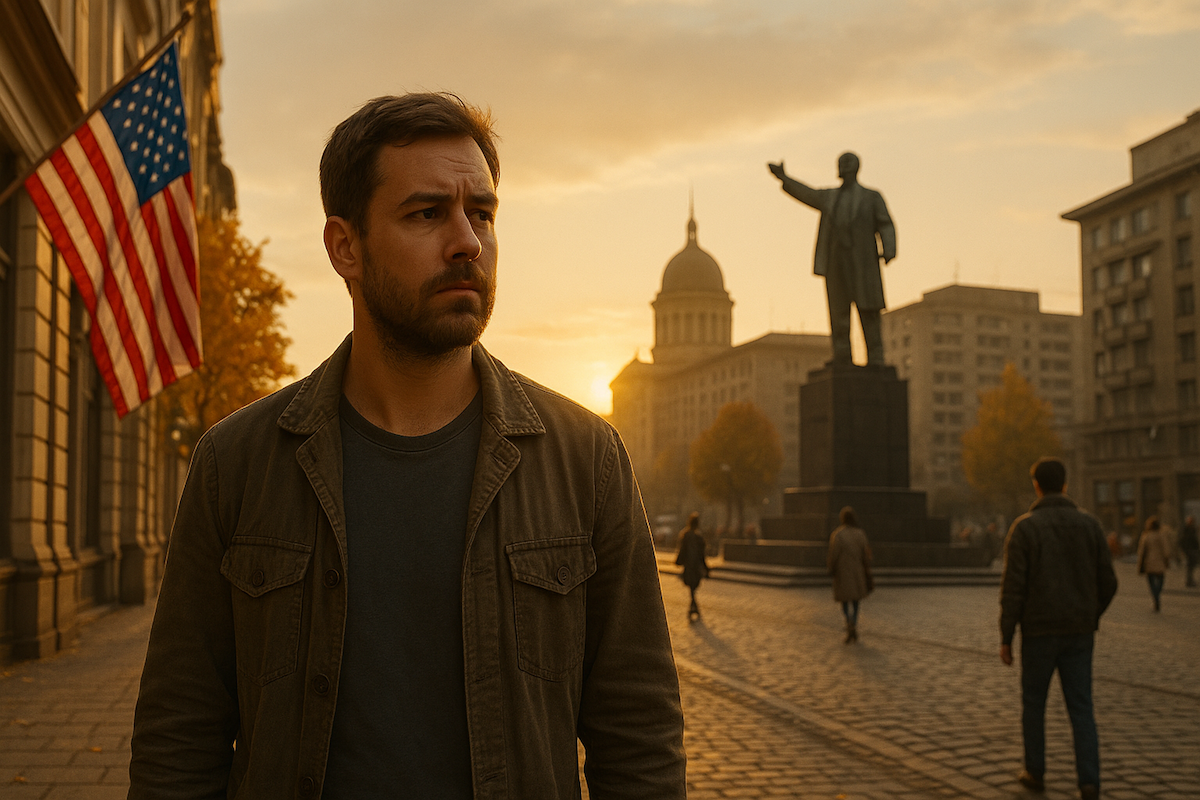
- I Thought I Was Free. Then I Moved East.
- 1. I Thought I Knew What Freedom Meant Until I Lived Without the Noise
- 2. Nobody Was Screaming About Liberty… and That Spoke Volumes
- 3. Real Political Conversations Without the Circus
- 4. No Guns, But More Peace of Mind
- 5. Community Over Individualism Felt Like a Hidden Kind of Freedom
- 6. Yes, There Was Surveillance… But Also Trust
- 7. The Hardest Truth: Poverty Doesn’t Kill Freedom… Pretending Does
- The Most Dangerous Illusion About Freedom Isn’t Where You Think It Is
I Thought I Was Free. Then I Moved East.
What Living in Former Soviet Countries Taught Me About Rights, Risk, and the Real Meaning of Liberty
I used to think freedom meant something simple.
Something American.
Like baseball games, backyard barbecues on the fourth of July, yelling at the news, and feeling morally superior at passport control.
We’re raised on the idea that we’ve cornered the market on liberty… exporting it like McDonalds, Coca Cola, corn syrup and Netflix.
But then I moved abroad.
First to Ukraine, just a few years after the collapse of the Soviet Union.
Later on to Georgia, Albania (not a former Soviet country, but a former isolated dictatorship), and a few other places Washington would politely describe as “developing democracies.”
But along the way, something weird happened.
I started seeing versions of freedom that didn’t come with a red, white, and blue label.
In fact, they didn’t come with any label at all.
No branding. No buzzwords. No fireworks!
Jeez! What was the world coming to…
It was just people navigating the mess of daily life with a kind of quiet autonomy I’d never recognized as freedom, because it didn’t look like the one I was sold back home.
This is not, yet another article bashing the West or even the good ol’ U.S.A..
It’s about questioning the script.
Because after spending decades abroad, I’ve come to believe something most Americans would never say out loud.
We might not be the freest people in the room… and once you start seeing it, you can’t unsee it.
1. I Thought I Knew What Freedom Meant Until I Lived Without the Noise
Back in 1998, I moved to Ukraine expecting things to be a little gray, a little corrupt, and very Cold War leftovers.
That was what I had found too… partly…
Yes, the infrastructure looked like it had been in a fistfight with history and lost.
But what I didn’t expect to find was how free I felt.
No one was lecturing me about liberty.
No one had flags in their Twitter bios or got into bar fights about the Constitution. Hell, Twitter and ‘social media’ didn’t even exist back then.
People just lived their lives, not talked about how free they were while cutting each other off in traffic.
That’s when I realized something.
In the U.S., we treat freedom like a product launch.
Loud, shiny, overmarketed, and constantly in need of defending… even when no one’s attacking it.
Freedom Isn’t Loud: Maybe real freedom doesn’t need PR.
Maybe it just needs room to exist without a hashtag.
2. Nobody Was Screaming About Liberty… and That Spoke Volumes
One of the first things I noticed in post-Soviet Ukraine was how little people talked about freedom.
You’d think after seventy years under the USSR, they’d be walking around yelling “Freedom!” like Mel Gibson in Braveheart.
But they weren’t. There were no dramatic speeches, no T-shirts that said “Live Free or Die,” and certainly no cable news anchors screaming about tyranny because someone asked them to wear a seatbelt.
Instead, freedom showed up in smaller ways.
Drinking a beer at the kiosk outside the Metro after work. Retirees selling dried fish they’d caught from the Dnieper over the weekend while babushkas sold sunflower seeds at the local bazaar.
All with zero permits or paperwork.
No slogans. Just choices.
Freedom Isn’t Loud: If your freedom has to be shouted 24/7 to be believed, it might be more performance than principle.
3. Real Political Conversations Without the Circus
In the U.S., political conversations feel like sports commentary mixed with reality TV.
Everyone’s yelling, nobody’s listening, and facts are more like optional seasoning.
But in places like Ukraine or Georgia, I’ve sat through kitchen-table debates where people who completely disagreed still poured each other shots of vodka.
These weren’t echo chambers, they were lived experiences. People who remembered standing in food lines or dodging Soviet conscription.
I once watched a retired Georgian professor calmly explain to a younger guy why capitalism wasn’t the utopia he thought it was, all while chain-smoking and dunking his bread in soup.
No one stormed out. No one “unfriended” or “cancelled” anyone. They just disagreed, ate, drank, and moved on.
Freedom Isn’t Loud: Maybe when politics isn’t treated like a cage match, people actually listen to each other.
4. No Guns, But More Peace of Mind
I’ve lived in neighborhoods in Kyiv and Tbilisi where the streetlights didn’t always work and the sidewalks had more holes than logic in a conspiracy forum.
But I still felt safer there walking home at 1 a.m. than I have in some suburban parking lots back in the States.
There were no open-carry guys browsing bread aisles with assault rifles.
No school “lockdown drills” because someone brought a suspicious backpack.
The idea that “freedom” means anyone can own a weapon designed for combat just doesn’t exist in most of the world.
But, guess what? The crime rate didn’t skyrocket. I didn’t feel oppressed. I felt relieved.
Freedom Isn’t Loud: If freedom means living in fear of the guy behind you at the gas station, maybe we’ve confused liberty with paranoia.
5. Community Over Individualism Felt Like a Hidden Kind of Freedom
In Skopje, the old woman downstairs once yelled at me for not wearing socks. Not because she was nosy, okay, she was nosy, but because after a while, she saw me as part of the building’s ecosystem.
Everyone looked out for each other, whether you asked for it or not.
In Albania, when the power went out, my neighbors didn’t just shrug and complain on Facebook. They lit candles, knocked on doors, and made sure everyone was okay.
Someone always had extra soup or tea or battery-powered gossip.
Compare that to the U.S., where “freedom” often means you don’t owe anyone anything, not time, not care, not even eye contact.
We call it independence. But it can feel a lot like isolation.
Freedom Isn’t Loud: Maybe real freedom isn’t being left alone.
Maybe it’s knowing you’re not.
6. Yes, There Was Surveillance… But Also Trust
Was there surveillance in Ukraine? Yep. Was there bureaucracy? You bet.
I once spent an entire afternoon registering my address… an address I wasn’t even sure had a working mailbox.
Yes, local police could also be, well… creative with their interpretations of the law.
But here’s what shocked me, people actually trusted each other more than the Cops.
In Georgia, a pharmacist once gave me antibiotics without a prescription, and told me to pay later if I didn’t have cash on me.
In Kyiv, I left my bag on a bus and someone actually returned it.
I didn’t need an app. I just needed a little faith in strangers.
In the U.S., we have facial recognition cameras, 18-digit passwords, and still don’t trust the person making our coffee.
Freedom Isn’t Loud: Being tracked by your government is scary. But being distrusted by *everyone*? That’s exhausting.
7. The Hardest Truth: Poverty Doesn’t Kill Freedom… Pretending Does
Let’s be real. Post-Soviet countries had (and still have) serious problems.
Cracked sidewalks. Power outages. Cash slipped into a passport at border control to grease the wheels of an overstay to avoid deportation or a missed flight.
Corruption you could smell. But there was something oddly freeing about the honesty of it.
No one pretended things were perfect. But no one smiled through gritted teeth about “living the dream” either.
In fact, pretending was the thing everyone had grown tired of, because that’s what the Soviets did.
Contrast that with life in the U.S., where we’ve perfected the art of keeping up appearances.
- Mortgage debt? Smile bigger.
- School shootings? Change the channel.
- System broken? Must be someone else’s fault.
There’s a psychological freedom in living somewhere that doesn’t hide its flaws behind a reality-TV filter.
Freedom Isn’t Loud: Maybe it’s not poverty that limits freedom, it’s the constant pressure to pretend you’re not drowning in it.
The Most Dangerous Illusion About Freedom Isn’t Where You Think It Is
Freedom isn’t loud. It doesn’t always come with symbols, slogans, or songs.
Sometimes, it looks like cracked pavement, missing manhole covers, quiet resilience, and nobody caring what bumper sticker you put on your beat-up car… because they’re too busy living.
So ask yourself this…
Have you ever felt more free outside the place that claims to be the freest?
What moment snapped your definition of liberty in half?
Because if freedom is real, it’s worth talking about… quietly or otherwise.

David Peluchette is a Premium Ghostwriter/Travel and Tech Enthusiast. When David isn’t writing he enjoys traveling, learning new languages, fitness, hiking and going on long walks (did the 550 mile Camino de Santiago, not once but twice!), cooking, eating, reading and building niche websites with WordPress.