
Contents
- They Know You’re Not Local Before You Even Blink
- 1. Your Posture Screams “I’m Not From Around Here”
- 2. You Walk Too Fast or Too Slow
- 3. Backpacks, Phones and That “Lost” Energy
- 4. The Tourist Smile Too Big Too Frequent Too American
- 5. Over-Dressed or Under-Dressed There’s No Middle Ground
- 6. You Hesitate Before Paying or Ordering
- 7. Looking Around Like It’s a Movie Set
- 8. Too Much Eye Contact or None at All
- 9. That Aura of Being On Alert Instead of At Ease
- Blending In Starts Long Before You Speak
They Know You’re Not Local Before You Even Blink
These Silent Clues Give You Away Before You Even Know It
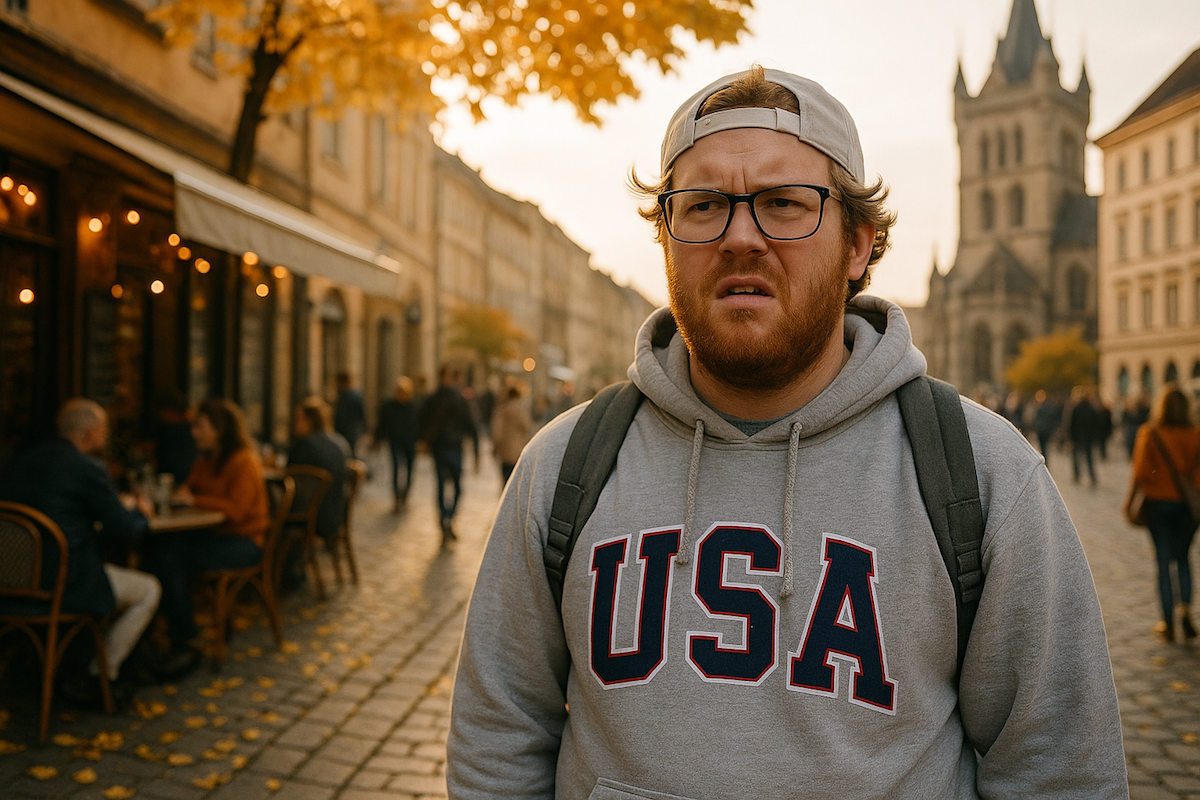
I hadn’t even sat down in that café in Krakow before the waitress locked eyes with me, gave a tight half-smile, and switched to English.
No menu handed over. No small talk. Just instant linguistic surrender.
How did she know?
I hadn’t opened my mouth. I wasn’t wearing an American flag or flip-flops with socks. So what was it?
The “I’ve-been-lost-for-20-minutes-but-won’t-admit-it” shoulders?
The tourist death grip I had on my phone?
Perhaps it was it that subtle, unmistakable foreigner vibe that follows us like cologne in a Paris metro at rush hour?
It wasn’t the first time either. In a sleepy Bulgarian train station, a woman pointed me to the ticket window before I even asked.
In Tbilisi, a bartender handed me an English menu before I’d even made eye contact.
Oh, and in a Kyiv supermarket? Let’s just say a babushka bypassed five locals to lecture me directly about picking the wrong brand of buckwheat.
These weren’t language fails and I hadn’t even said a word.
Turns out, there are signals we send without knowing it.
Posture, energy, facial expressions, eye contact, pacing, hesitation.
Stuff that screams “not from here” before you’ve even unfolded your phrasebook or butchered “hello” in the local language.
So if you’ve ever wondered how locals seem to clock you in under three seconds, keep reading.
Because you don’t need to say a single word to be read like an open passport.
1. Your Posture Screams “I’m Not From Around Here”
I learned this one the hard way on my very first day in my new Obolon neighborhood of Kyiv.
I stood in line at the post office like I was auditioning for a military role, shoulders tight, neck stiff, backpack fully loaded like I was ready to summit Everest instead of mail a letter.
Meanwhile, the locals? Relaxed. Casual. Like they’d done this a hundred times, because they had.
Whether it’s Sofia, Tirana or Tbilisi, posture gives you away before your accent does.
If you’re holding your body like you’re bracing for a surprise exam, guess what?
You’ve already failed the local vibe check.
What to watch for: Unclench. Let your shoulders drop.
You’re not storming the embassy. You’re just ordering coffee.
2. You Walk Too Fast or Too Slow
In Paris, I was once accused of “American pacing.” Apparently, it’s a thing. Too fast, too business-like.
In Albania? Walk too slow and you’ll get passed by grandmothers in orthopedic sandals…
Uphill!
Each city has a tempo.
In Tbilisi, locals stroll like they’re heading somewhere but not in a rush.
In Spain, especially smaller towns, it’s even more laid-back.
In Italy, the passeggiata (evening stroll) is a tradition.
In Poland, it depends if it’s before or after 9 AM and if someone’s holding a kebab.
What to watch for: Match the local rhythm. Walk like you’ve been there before.
Even if your feet are bleeding, fake that familiarity.
3. Backpacks, Phones and That “Lost” Energy
I once tried to look casual checking my phone for directions in a side street in Sofia. A man selling roasted corn yelled out, “Looking for the metro? That way.” Didn’t even break eye contact with his corn.
There you are, backpack hiked high and strapped tight, checking your phone every five steps, constantly glancing up, like the buildings all around you have hidden snipers hunting tourists.
You’re practically wearing a neon sign that says “Help me, I’m lost but too proud to admit it.”
What to watch for: Before you step out, know where you’re going.
Even if you don’t, at least act like you’re going somewhere on purpose.
4. The Tourist Smile Too Big Too Frequent Too American
In Kyiv, I smiled at everyone for a solid week until my girlfriend’s mother asked if I had a few screws loose.
Why, because in Ukraine, smiling at strangers just means you’re either a fool or up to something…
In France, it simply means you’re… American.
That wide-eyed, overly friendly grin we’ve been taught to flash everywhere?
Abroad, it can come off as naive at best, or fake at worst.
What to watch for: Mirror what locals do. If they’re expressionless, follow suit. Save the smile for people you actually talk to. Or cats.
5. Over-Dressed or Under-Dressed There’s No Middle Ground
In Kyiv, I wore shorts and a T-shirt to meet my girlfriend for dinner once. She took one look at me, turned around and walked right back to the metro in a huff.
Never again.
In Saranda, Albania, I showed up to a bar in a nice jacket, jeans and boots while everyone else looked like they were attending a beach wedding.
Too much effort screams outsider.
Too little effort? Same result.
Locals have mastered that mystical “just right” appearance.
You? You look like you dressed in the dark, during a fire drill.
What to watch for: Study what locals wear, not influencers, locals. Adapt fast or prepare to be judged by every elderly woman on the street.
6. You Hesitate Before Paying or Ordering
In a Bulgarian café, I paused for a second too long at the register.
The cashier rolled her eyes, slid me the English menu, and switched languages before I even opened my mouth.
Locals don’t hesitate.
They know what to order, how to say it, how to pay, and when to tip, or not.
That tiny delay between when your eyes hit the menu and your mouth forms a sentence?
That’s all it takes.
What to watch for: Learn key menu phrases. Watch how others order. And for the love of coffee, know how much cash you need before you’re at the front.
7. Looking Around Like It’s a Movie Set
In Spain, I once got caught gawking at a group of elderly men playing dominoes like I was witnessing the birth of democracy.
They were not amused.
Yes, new places are fascinating and the architecture is beautiful.
But staring at everything like it’s the first time you’ve seen a building won’t help you blend in.
Locals walk past UNESCO sites every day without flinching.
What to watch for: Take your mental photos and move along. Save the admiration for moments when no one’s watching you admire.
8. Too Much Eye Contact or None at All
Eye contact is a cultural minefield. In Japan, too much is seen as aggressive.
In parts of Latin America, avoiding it is seen as evasive.
In Ukraine, a well-placed stare can mean “What do you want?” or “Do I know you?” or “Leave me alone.” Or all three.
I’ve had students in Kyiv tell me I looked angry just because I held eye contact too long.
Meanwhile, an old boss used to give me the untrustworthy vibe by never making any eye contact at all.
His cold fish-like weak handshake was no help either…and guess what?
I was right.
What to watch for: Look around and observe what’s normal.
Match the local intensity, or risk looking like a security threat or a confused mannequin.
9. That Aura of Being On Alert Instead of At Ease
This one’s the hardest to spot in yourself.
You might think you look relaxed, but tight shoulders, eyes darting around like you’re casing the joint, and flinching when someone speaks the local language scream “foreigner at DEFCON 2.”
Locals notice that tension before you even realize you’re carrying it.
I once got flagged by a plainclothes security cop in a high end Parisian department store just for “acting suspicious.”
My crime? Looking over my shoulder while trying to find a change room.
Locals don’t scan the horizon. They know their space.
You, however, look like you’re waiting for Liam Neeson to come rescue you, like in the movie “Taken”.
What to watch for: Deep breath. Walk like you belong. Don’t flinch when someone says something you don’t understand.
They’re probably just asking if you want a bag.
Blending In Starts Long Before You Speak
You can memorize “hello” in five languages, perfect your accent, even know when to say “cheers” or avoid shaking hands.
But none of that matters if your body is screaming “I just got off the plane.”
Blending in is about micro-adjustments.
The subtle cues. The pace. The posture. The calm.
It’s what separates the seasoned traveler from the guy getting charged double at the fruit market and paying the “Foreigner Tax”.
What’s one invisible habit that always gives someone away as a foreigner where you live or travel?

David Peluchette is a Premium Ghostwriter/Travel and Tech Enthusiast. When David isn’t writing he enjoys traveling, learning new languages, fitness, hiking and going on long walks (did the 550 mile Camino de Santiago, not once but twice!), cooking, eating, reading and building niche websites with WordPress.