

The Mundane Situations No Influencer Films Because They Don’t Look Dangerous… Until You’re the One Trapped Inside Them.
The scariest moment abroad usually isn’t dramatic.
Nobody’s chasing you through a dark alley in Kyiv.
You’re not hanging upside down from a ferry crossing between Albania and Corfu while Balkan gangsters demand ransom money.
Most of the time, it’s something embarrassingly ordinary.
Your phone suddenly stops working in Tbilisi.
Your bank app freezes right before paying rent.
Your Airbnb host in Athens stops replying while you’re standing outside with luggage and 94 degree heat slowly roasting your soul.
The guy in Ukraine who promised to “help you with everything” suddenly becomes harder to reach than a human being trying to cancel a gym membership.
Then comes the moment that really gets you.
Recognition.
The realization that your entire life abroad is being held together by passwords, battery life, unstable apps, temporary people, and a level of optimism that probably should’ve been questioned earlier.
I learned this lesson years ago in Kyiv after my American bank froze my card over perfectly normal transactions.
One declined debit card later, I was standing inside a grocery store with a handful of kopecks, mentally calculating whether instant noodles and a bruised banana counted as a balanced dinner.
Turns out “international freedom” feels a lot less cinematic when your card declines buying toilet paper.
The breaking points abroad usually arrive quietly through tiny system failures that pile on top of each other until you realize the safety net you imagined was mostly decorative.
Most people prepare for moving abroad like they’re planning a vacation with better scenery and cheaper wine.
What they don’t prepare for is the psychological shock of realizing that when things stop working overseas, nobody’s rushing in to fix it for you.
Not the embassy and certainly not your expat Facebook group.
Because once the little things abroad start breaking, you realize how frighteningly fast your entire “new life” can start unraveling.
1. When Your Phone Dies and Your Entire Life Dies With It
It’s amazing how confident you feel abroad until your phone battery hits 1%.
One minute you’re casually navigating the streets of Tbilisi like some rugged international man of mystery.
The next minute you’re standing outside an apartment building sweating through your shirt while realizing your entire existence depends on a tiny glowing rectangle made in China.
No maps. No translator. No Bolt app. No bank access.
Nada! Zilch!
I learned this lesson the hard way in Kyiv after my phone died while trying to meet someone near a metro station I could barely pronounce correctly sober, let alone stressed.
I still remember wandering around Pozniaky asking for directions in broken Russian while random babushkas looked at me like I was either lost or recently escaped from somewhere secure.
People love talking about “freedom abroad.” Nobody talks about the emotional collapse that begins when your phone dies at 11 PM in a neighborhood where you can’t even read the alphabet.
That’s when the fantasy starts cracking.
No One’s Coming: Always build analog backups abroad. Carry emergency cash, write down important numbers, download offline maps, and keep printed addresses in your wallet like it’s 1997.
2. The Friend Who “Knows Everything” Suddenly Disappears
Every expat eventually meets “the guy.” The local fixer who somehow knows the landlords, the visa people, the cheap dentist, the SIM card guy, and possibly a cousin who can “handle things.”
When I first lived in Ukraine, guys like this appeared constantly. Usually smoking, usually wearing black leather jackets, and usually answering questions with phrases like, “Don’t worry, my friend. I know a guy.”
At first, it feels comforting.
Then one day they stop answering messages.
Suddenly your residency issue becomes your residency issue. Your apartment problem becomes your apartment problem.
Dependence can feel a lot like friendship in the beginning, especially when you’re overwhelmed and trying to function in another language.
I’ve seen fellow teachers in Kyiv build their entire survival system around one overly connected local friend. Then the friendship faded or money got involved, and the entire support structure collapsed like cheap patio furniture.
Most people moving abroad prepare with checklists and backup credit cards. Very few prepare for what happens when people stop showing up.
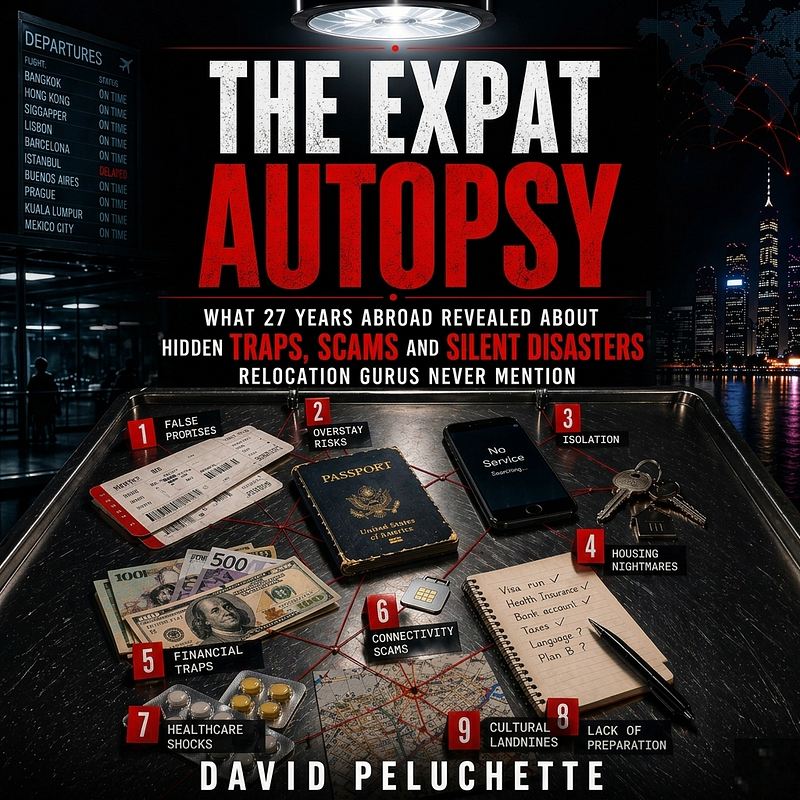
The Expat Autopsy ($47) explores those hidden pressure points in detail. Not the glamorous fantasy version of relocation, but the psychological mechanics underneath it.
No One’s Coming: Never build your entire life abroad around one person. Learn the systems yourself, ask questions, and build multiple connections.
3. The Day You Realize Being “Technically Right” Means Absolutely Nothing
One of the hardest lessons abroad is realizing paperwork doesn’t always protect you. You filled out the forms, brought the documents, and even printed extra copies because somewhere deep inside you still believe organization can defeat bureaucracy.
Nice. Real cute.
I learned this lesson in Tbilisi dealing with residency paperwork that seemed to change depending on the day, the office, and the employee.
One official told me one thing, another told me something completely different, and a third looked at my paperwork for three seconds before shaking her head.
“No.”
No explanation. Just a flat “ara” no.
That’s when you begin understanding something deeply uncomfortable about life abroad.
Systems are run by people.
Back home, most Americans grow up believing that if you follow the rules correctly, things generally work out.
Abroad, especially in places where systems are more relationship based, you quickly discover that being technically correct and actually protected are two very different things.
No One’s Coming: Never confuse paperwork with protection. Resilience matters more than perfection abroad.
4. When a “Cheap Country” Suddenly Stops Feeling Cheap
Nobody warns you how expensive confusion becomes abroad. People online love bragging about how little they spend living overseas while conveniently leaving out the financial chaos happening behind the scenes.
One rushed visa run, one terrible landlord, one emergency flight, three Airbnb moves, and suddenly your “cheap life abroad” starts feeling suspiciously expensive.
I’ve watched this happen constantly with newer expats chasing the fantasy of escaping expensive Western life.
One bad apartment decision in Tbilisi or one emotionally exhausted panic move from Tirana to somewhere else can burn through savings fast.
Money disappears even faster when your decision making starts running on stress instead of a clear head.
Pretty sure half my worst financial decisions abroad were made while overheated, sleep deprived, or standing in immigration lines slowly losing faith in humanity.
No One’s Coming: The true cost of living abroad isn’t rent. It’s how expensive mistakes become when you’re tired, overwhelmed, and unfamiliar with the system around you.
5. The Moment You Realize You’re Performing Confidence
Most expats spend their first year abroad pretending they’re handling things better than they actually are.
I definitely did.
Smiling in cafés, posting photos from Greece, talking about “freedom” while internally trying not to have a psychological meltdown over banking problems, bureaucracy, loneliness, and why every apartment pillow in Eastern Europe feels stuffed with roofing materials.
Social media makes expat life look emotionally clean.
It isn’t.
A lot of people abroad are quietly overwhelmed while simultaneously trying to convince everyone back home they’re living their best life.
That’s the stage nobody posts about.
The stage where moving abroad stops feeling like reinvention and starts feeling like confrontation.
Stress follows you. Insecurity follows you. Loneliness follows you. Health and money problems follow you.
Some of the hardest moments I’ve had abroad weren’t logistical at all.
They were psychological.
No One’s Coming: Living abroad doesn’t automatically reinvent you. Sometimes it just removes the distractions hiding what was already there.
6. The Quiet Night You Finally Understand What Independence Actually Means
Eventually, if you stay abroad long enough, you experience one very quiet shift.
You stop expecting rescue.
No embassy miracle. No magical expat community. No influencer blueprint. Not your online relocation/residency guru you paid thousands of dollars to. Not even your family.
Just adaptation, preparation, awareness, patience, and emotional control.
I think this realization hit me hardest one summer night in Albania sitting alone on my balcony overlooking Corfu.
There was no crisis.
Just exhaustion mixed with perspective after years of trying to romanticize life abroad into something simpler than it actually was.
You slowly stop chasing fantasy and start paying attention to reality. Independence stops meaning “fearless” and starts meaning prepared.
That version of expat life is much less cinematic than the influencer version.
But, much more real.
No One’s Coming: Preparation abroad isn’t paranoia. It’s the difference between reacting emotionally and navigating reality clearly when things stop going according to plan.
The Fantasy Usually Dies Quietly
The strangest thing about life abroad is that the biggest lessons rarely arrive dramatically. They arrive through inconvenience, confusion, and moments where your confidence suddenly stops matching reality.
That’s usually when the fantasy starts dying.
Funny enough, that’s also when real awareness begins.
Eventually you stop chasing the dream version of life abroad and start learning how life abroad actually works.
Most expat problems don’t begin with catastrophe. They begin with small misunderstandings that quietly compound until one day you realize you’ve been operating inside systems you never fully understood in the first place.
That’s exactly what The Expat Autopsy ($47) explores. Not the postcard version of relocation, but the hidden pressure points underneath it, the dependency traps, the psychological blind spots, and the quiet collapses people rarely talk about until they’ve already lived through them.
Not to scare people away from moving abroad.
Just to help them see the experience more clearly before the pressure arrives.
What’s the quiet moment abroad that changed how you saw everything?
The Expat Autopsy ($47)

David Peluchette is a Premium Ghostwriter/Travel and Tech Enthusiast. When David isn’t writing he enjoys traveling, learning new languages, fitness, hiking and going on long walks (did the 550 mile Camino de Santiago, not once but twice!), cooking, eating, reading and building niche websites with WordPress.