
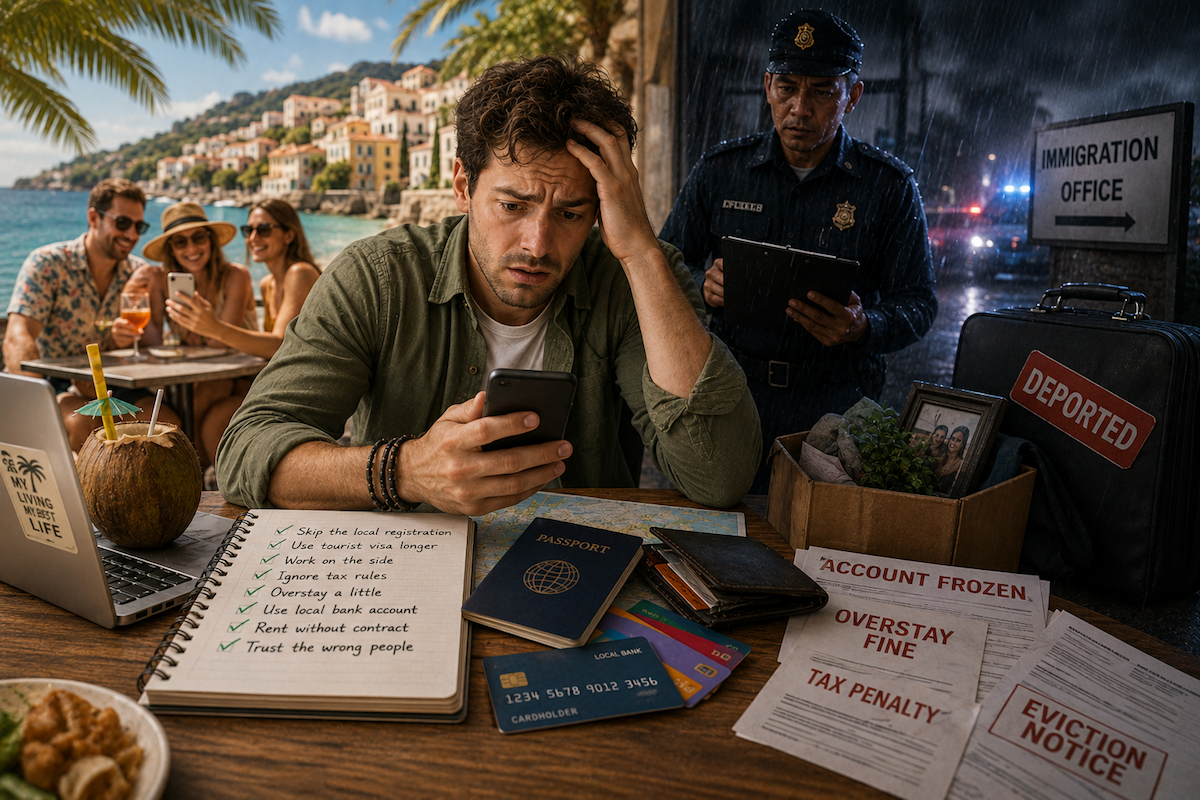
What Feels Convenient Overseas Can Quietly Turn Your Life Upside Down
The worst mistakes I’ve seen abroad didn’t begin with an expat in handcuffs, deportation, or some dramatic embassy meltdown. Not right away…
They began with someone smiling and saying, “Relax. This is how things work here.”
I heard it in Tbilisi from a landlord who didn’t think contracts mattered much.
I heard it years earlier in Kyiv while holding residency paperwork that suddenly meant nothing because “the rules changed yesterday.” Funny how fast confidence evaporates when a civil servant looks at you like expired yogurt.
At first, nothing feels wrong.
That’s the dangerous part.
Most people imagine expat disasters as dramatic movie scenes. Corrupt cops. Stolen passports. Liam Neeson kicking down doors somewhere in Eastern Europe.
Real life abroad usually breaks people much quieter than that.
A handshake agreement that changes later. An expat friend who “knows a guy.” A cheap apartment that slowly turns your nervous system into mashed potatoes.
Living abroad taught me something uncomfortable. Most expensive mistakes don’t arrive looking expensive.
They arrive looking convenient.
1. The Friendly Shortcut That Quietly Removes Your Leverage
“Don’t worry, my friend handles this stuff.”
Those words have probably emptied more foreign bank accounts than actual pickpockets.
I learned this lesson renting an apartment in Kyiv years ago. A local “acquaintance” assured me contracts were unnecessary because the landlord was “a good guy.” For a while, everything worked perfectly.
Then winter arrived.
Suddenly heating “wasn’t included anymore.” Repairs became my responsibility. The landlord started appearing unannounced like he personally owned the oxygen inside the apartment.
A lot of problems abroad begin with ambiguity. Everybody assumes something slightly different until reality finally sends you the invoice.
Somebody offers to “speed up” paperwork in Georgia. Somebody knows a better visa route through Greece if you pay cash upfront.
At first, it feels like insider knowledge.
Later, you realize you traded away leverage for convenience.
The Real Invoice: The moment someone says “don’t worry about the paperwork,” you should already start worrying about your future leverage.
2. The Expat Who Becomes Your “Instant Best Friend” Too Fast
Loneliness abroad speeds up trust in weird ways.
People you’d cautiously get to know over years back home suddenly become your emotional support system after two beers and one shared complaint about bureaucracy.
I’ve seen it happen from Kyiv to Saranda. A newly arrived expat meets another foreigner who seems connected and experienced.
At first, it feels comforting.
That’s usually when the blind spots begin.
I once knew an American guy in Ukraine who attached himself to another expat almost immediately.
Within months, he’d loaned him money, signed a terrible apartment deal through one of his “friends,” and ended up trapped inside a social circle he no longer even liked.
Isolation changes judgment fast. Familiarity starts feeling like safety.
Most expats aren’t manipulated by masterminds.
They’re just tired, lonely, and desperate for stability.
The Real Invoice: Abroad, loneliness can make bad judgment feel like connection.
This is the part most relocation content skips.
The real problem is the hidden leverage shift underneath the surface mistake.
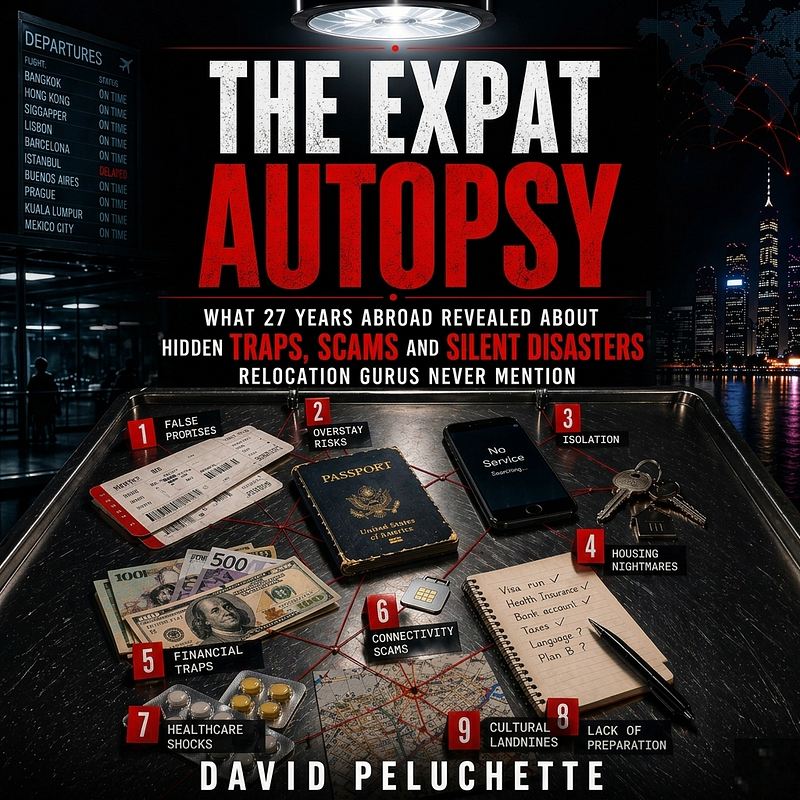
That’s one of the biggest themes explored inside The Expat Autopsy ($47), where I break down the invisible systems and harmless looking situations that quietly spiral once you’re already committed abroad.
3. The Apartment That Looked Perfect Until You Actually Lived There
Every bad apartment abroad looks manageable on Day One.
I rented a place in Tbilisi that looked perfect online.
Great views. Wooden floors. Cheap rent that made me feel like I’d beaten the system. A great Georgian restaurant right around the corner.
Then nighttime arrived.
The walls were apparently made from recycled crackers because I could hear entire conversations next door. Hot water disappeared randomly. Winter heating worked with all the reliability of campaign promises.
Even the smell of cigarette smoke mysteriously seeped through the walls.
Suddenly, that great deal of an apartment stopped feeling like a sanctuary and became yet another trade-off to manage.
The Real Invoice: A bad apartment abroad doesn’t just drain money. It drains your decision making energy.
4. The Tiny Cultural Mistake You Didn’t Even Know You Made
Some of the most expensive mistakes abroad happen before you even realize you broke a social rule.
I learned this during my early years in Ukraine when I approached conversations the way Americans usually do.
Friendly. Curious. Smiling. Asking questions like an unsupervised 6 year old.
Turns out, that energy doesn’t always translate well.
I still remember asking somebody in Kyiv, “So, what do you do?” The guy looked at me like I’d requested his banking passwords.
Another time in France, I casually asked a bartender in Dieppe, “How are you?” and accidentally triggered a full emotional documentary about politics and existential despair.
Meanwhile Americans think we’re just being polite.
Abroad, people constantly interpret you through cultural filters you can’t even see yet.
Most cultural mistakes don’t explode dramatically.
They just quietly erode trust in the background.
The Real Invoice: You can accidentally damage trust abroad long before you understand the rules you violated.
5. The Cheap Life That Somehow Costs More Than Your Old One
“Everything’s so affordable here.”
That sentence has financially humbled more expats than inflation or currency devaluations ever could.
I remember arriving in Eastern Europe years ago feeling like I’d unlocked some secret financial cheat code. Cheap rent. Cheap food. Cheap transportation.
Cheap. Cheap. Cheap!
Then real life starts stacking hidden costs on top of each other like unpaid parking tickets.
Visa runs. Translation fees. Emergency flights. Backup bank cards. Temporary apartments.
I’ve had internet collapse during work deadlines in Albania. I’ve dealt with frozen banking apps traveling between Greece and Georgia.
Cheap countries become expensive once instability enters the equation.
Your budget may look cheaper on paper.
Your mental load usually doesn’t.
The Real Invoice: Cheap living abroad gets expensive fast when your systems stop working normally.
6. The Day You Realize Nobody Is Actually Coming to Help You
Most expats don’t realize how alone they are until something goes seriously wrong.
One of those moments for me came during the pandemic in Georgia. I sat inside a government office in Tbilisi clutching vaccination documents while the woman behind the plexiglass casually informed me the rules had changed.
No explanation.
No urgency.
Just paper-pushers with bureaucratic indifference.
I walked outside realizing something uncomfortable.
Years abroad hadn’t made me immune to uncertainty.
They’d just made me better at pretending I controlled it.
People love talking about their “expat community” or how the U.S. embassy will come to their rescue like the cavalry.
Then something serious happens.
Medical issue. Legal issue. Residency problem. Pandemic.
Suddenly everybody gets very quiet.
You discover most social circles abroad are built around convenience, not actual support.
Oh, and your embassy? They aren’t coming to save you either.
The Real Invoice: The hardest part of expat life isn’t culture shock. It’s realizing how fragile your safety net really is.
7. The Moment You Stop Feeling Like Yourself
Nobody talks enough about what prolonged uncertainty does to your personality.
At first, living abroad feels exciting.
Like a new found freedom!
New routines. New languages. New foods. Perhaps a new job with new colleagues. New pubs and cafes.
Then eventually your nervous system gets fried.
You start second guessing small decisions. Minor inconveniences feel emotionally bigger than they should.
I’ve gone through phases abroad where I barely recognized my own personality anymore.
You start reading every room like it’s a visa interview in bad lighting, trying to decide if that pause was normal, or if you’ve just accidentally volunteered to spend the afternoon chasing stamps across town.
After a while, that gets under your skin. You’re smiling in some beautiful city while slowly losing your mind inside an overpriced Airbnb with weird plumbing, damp towels, mystery noises, and no electricity due to your 5th power cut that week.
Nobody sees the decision fatigue underneath it all.
The Real Invoice: Living abroad doesn’t just test your plans. Eventually it tests your identity.
8. The Moment You Realize the Problem Was Never the “Mistake”
Most people move abroad thinking the biggest threats are obvious.
Crime. Corruption. Pickpockets. Visa problems.
Real life usually works differently.
The most expensive situations I’ve experienced abroad often started with something ordinary. A favor or some shortcut.
A misunderstanding so small it barely registered at the time.
I’ve watched people lose apartments because they trusted verbal agreements. I’ve seen expats become trapped inside toxic social circles because loneliness clouded their judgment.
The real danger usually isn’t one giant mistake.
It’s several harmless looking misunderstandings quietly stacking together until your options suddenly shrink.
Eventually you stop asking, “What went wrong?”
You start asking, “Why didn’t I see it earlier?”
The Real Invoice: Most expensive mistakes abroad don’t arrive looking dangerous. They arrive looking normal.
The Part Nobody Warns You About Until It’s Already Happening
The most expensive misunderstandings abroad rarely look dramatic in the beginning.
That’s exactly why people walk straight into them.
Nobody panics when the landlord says the paperwork can wait. Nobody questions the overly friendly expat who seems helpful at first.
The consequences arrive later.
Quietly.
Living abroad absolutely can change your life for the better. Some of my best experiences happened in Ukraine, France, Georgia, Greece, Spain, and Albania.
But life abroad also exposes the assumptions you didn’t know you were dragging around in your mental carry-on since you arrived.
Most people think moving abroad is about geography.
Eventually you realize it’s really about pressure.
Pressure reveals what you understand. Pressure also reveals what you don’t.
That’s exactly why I wrote The Expat Autopsy ($47).
I wrote it because after nearly three decades abroad, I kept seeing the same hidden patterns quietly unravel people over and over again.
The leverage traps.
The silent failures.
Because most disasters abroad don’t begin with chaos.
They begin with misunderstandings that looked harmless at the time.
The Expat Autopsy ($47).
What’s one small misunderstanding abroad that ended up teaching you a much bigger lesson later?

David Peluchette is a Premium Ghostwriter/Travel and Tech Enthusiast. When David isn’t writing he enjoys traveling, learning new languages, fitness, hiking and going on long walks (did the 550 mile Camino de Santiago, not once but twice!), cooking, eating, reading and building niche websites with WordPress.