
What I Laughed At Before Life Abroad Got Real
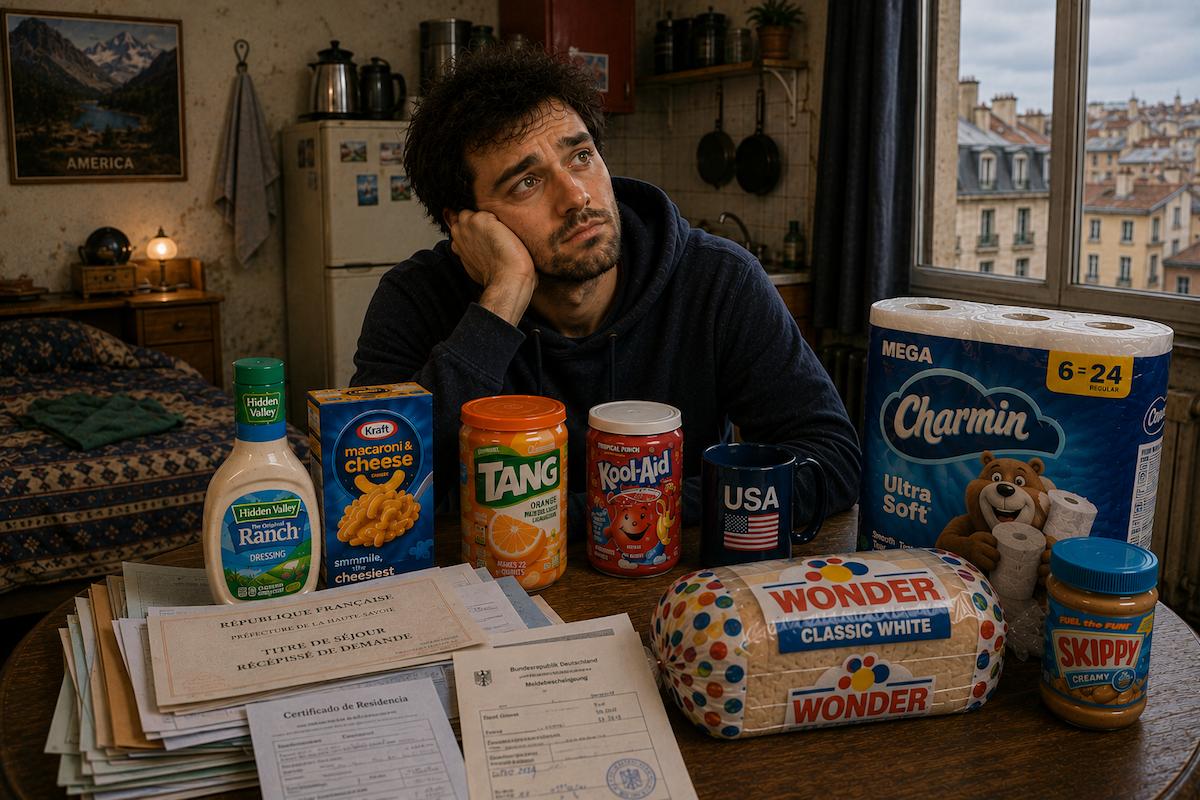
I Used To Roll My Eyes At These American Comforts… Until Living Abroad Made Me Desperate For Them
I didn’t miss America when I left.
But, I missed it later, sweating in a government office in Kyiv with a folder full of documents while nobody behind the glass window seemed remotely interested in helping me.
One woman kept disappearing for cigarette breaks while the waiting room slowly turned into a hostage situation with paperwork.
Back in my younger “I’m not like other Americans” phase, I used to roll my eyes at giant supermarkets, ice filled drinks, and customer service workers pretending your existence mattered.
I thought all that stuff made Americans spoiled.
Then life abroad humbled me fast.
Turns out, convenience isn’t always laziness. Sometimes it’s the difference between solving a problem quickly and watching your week spiral into bureaucratic purgatory because somebody named Svetlana Petrovna suddenly decides your document needs a different stamp than it did yesterday.
Here are 9 American comforts I used to laugh at until life abroad humbled me fast.
1. Customer Service That Pretends You Matter.
The first time a bank employee in Kyiv shrugged at me mid problem and disappeared for lunch, I realized American customer service had spoiled me rotten.
In Ukraine during the late 90s, customer service often felt less like hospitality and more like surviving an interrogation.
I remember standing in line at a mobile phone provider’s office in Kyiv while two employees argued over pastries and tea like I wasn’t standing there.
Bad service I could handle.
What drove me insane was never knowing whether anything would actually get resolved.
What Humbled Me: Predictable systems don’t seem important until your entire week depends on someone who genuinely doesn’t care whether your problem gets solved or not.
2. 24 Hour Convenience Isn’t Laziness. It’s Emotional Survival.
I used to mock Americans for needing giant pharmacies and endless supermarkets open twenty four hours a day. Then I got sick abroad on a Sunday and suddenly CVS started looking like one of the greatest achievements in human civilization.
I remember being in Tbilisi during a brutal summer heatwave, sweating through my bedsheets while half the town seemed closed for the afternoon.
Back home, I could’ve solved the problem in ten minutes.
Abroad, solving simple problems can become a full day side quest involving closed shops, language barriers, and mysterious lunch breaks.
France humbled me too. I once spent half a day in Dieppe searching for cold medicine while every pharmacy closed for lunch.
What Humbled Me: The longer you live abroad, the more you realize convenience isn’t luxury.
3. Americans Expect Things To Work. That Assumption Gets Expensive.
I didn’t realize how American I was until I started assuming deadlines actually meant something.
In my head, paperwork worked like math. Follow the rules and eventually get the result you’re supposed to get.
That fantasy died slowly over many years abroad.
It started in post Soviet Ukraine and followed me to Georgia.
I remember once spending weeks gathering documents for a residency related issue in Kyiv.
Then one employee casually informed me the requirements had changed overnight.
Yesterday’s correct paperwork suddenly became today’s useless garbage.
That’s when you realize many systems abroad don’t run on paper logic.
Things depended on relationships, timing, office politics, and whoever happened to be sitting behind the desk.
What Humbled Me: The most exhausting part of expat life isn’t learning new rules. It’s realizing the rules can change while you’re still standing in line.
4. The American Obsession With Personal Space Suddenly Makes Sense.
I used to think Americans were overly dramatic about privacy and personal space.
Then I spent enough years abroad hearing neighbors argue through walls so thin I could probably testify in court about their relationship problems.
In one apartment in Tbilisi, I could hear a man sneeze three floors below me like we were sharing the same respiratory system.
Back home, I used to think Americans were paranoid about boundaries. Abroad, I slowly realized privacy isn’t always about comfort.
Sometimes it’s recovery.
What Humbled Me: Some comforts only seem excessive until you spend enough time living without them.
5. Ice, Dryers, Free Refills, and AC Aren’t Really About Comfort.
I used to laugh at Americans needing giant dryers, ice filled drinks, and aggressive air conditioning.
Then I spent enough summers abroad sweating directly through my soul.
People who romanticize living abroad have clearly never tried sleeping in a hot apartment in Southern Europe while a tiny fan pushes warm air around the room like a depressed hair dryer.
At one apartment in southern France, my clothes dried so stiff and crunchy they felt medically preserved.
What Humbled Me: The things you mock back home start looking very different once daily life stops feeling easy.
6. America’s Fake Friendliness Suddenly Feels Useful.
I used to think American friendliness felt fake.
Then I spent enough time in places where strangers looked at me with the emotional warmth of unpaid tax auditors.
Back home, cashiers ask how you’re doing even when both of you know nobody actually cares. Abroad, I started missing those small fake interactions more than I expected.
In Ukraine during the 90s, smiling at strangers too much could make people suspicious or think you were insane (literally).
What Humbled Me: You don’t realize how emotionally regulating casual friendliness can be until you spend enough time without it.
7. I Didn’t Miss America. I Missed Predictability.
That realization hit me slowly.
I didn’t miss America itself nearly as much as I missed knowing how life worked.
Back home, I understood the invisible rules. I knew how our healthcare worked (as crappy as it was, but at least the doctors understood me), how banking worked, and how paperwork worked.
Abroad, even simple tasks could feel psychologically draining because nothing worked quite the way I expected.
Living abroad often means existing in a constant low grade state of uncertainty.
What Humbled Me: Most people prepare financially for life abroad. Very few prepare psychologically.
8. The Humbling Part Isn’t Missing America. It’s Understanding Why.
The older I get, the less interested I am in winning cultural arguments.
In my twenties, I thought mocking America made me worldly. I rolled my eyes at suburban convenience, oversized SUVs, giant grocery stores, free refills, giant dryers, and aggressive air conditioning.
I thought struggling abroad made me more authentic because I could survive without decent air conditioning and properly dried towels.
Then life abroad slowly beat the smugness out of me.
Living in Ukraine taught me resilience. France taught me patience. Georgia taught me adaptability. Spain taught me how to slow down long enough to actually enjoy life again. Albania has taught me how little I actually need to feel happy.
Every country gave me something valuable. Yet, every country also extracted a price.
That’s the part travel influencers and the “move abroad” fanatics rarely talk about.
I didn’t start appreciating certain American comforts because I became more patriotic.
I started appreciating them because I finally understood what they were protecting me from.
What Humbled Me: Living abroad humbles you fastest when it destroys assumptions you didn’t even realize you were carrying.
9. The Comfort Of Knowing Who To Call.
One thing Americans massively underestimate until they live abroad is the comfort of already knowing how everything works when something goes wrong.
Back home, if your sink explodes, your bank freezes your card, or your landlord starts acting insane, you usually know what to do next.
Abroad, small problems can suddenly feel terrifying because your support system is thinner than you realized.
I learned this during different points in Ukraine and Georgia whenever something unexpected happened and I realized how alone I actually was.
No family nearby.
No lifelong network.
Sometimes not even enough language ability to explain the problem properly.
What Humbled Me: Life abroad feels very different once you realize independence and isolation are sometimes separated by a very thin line.
The American Comforts I Finally Understood.
I still remember sitting in that government office in Kyiv holding a folder full of useless paperwork while employees wandered off for another cigarette break like time itself had stopped functioning.
Back then, I thought I was frustrated about documents.
I wasn’t.
I was grieving predictability.
That’s what finally changed for me after decades abroad. The comforts I mocked back home weren’t always about convenience.
Living abroad can absolutely expand your world, but it also has a nasty habit of exposing assumptions you didn’t even realize you were carrying around in your head.
What’s something you once mocked about your home country until living abroad made you appreciate it?
For more personal writing about life abroad, take a look inside The Expat Backroom, my paid newsletter.

David Peluchette is a Premium Ghostwriter/Travel and Tech Enthusiast. When David isn’t writing he enjoys traveling, learning new languages, fitness, hiking and going on long walks (did the 550 mile Camino de Santiago, not once but twice!), cooking, eating, reading and building niche websites with WordPress.