
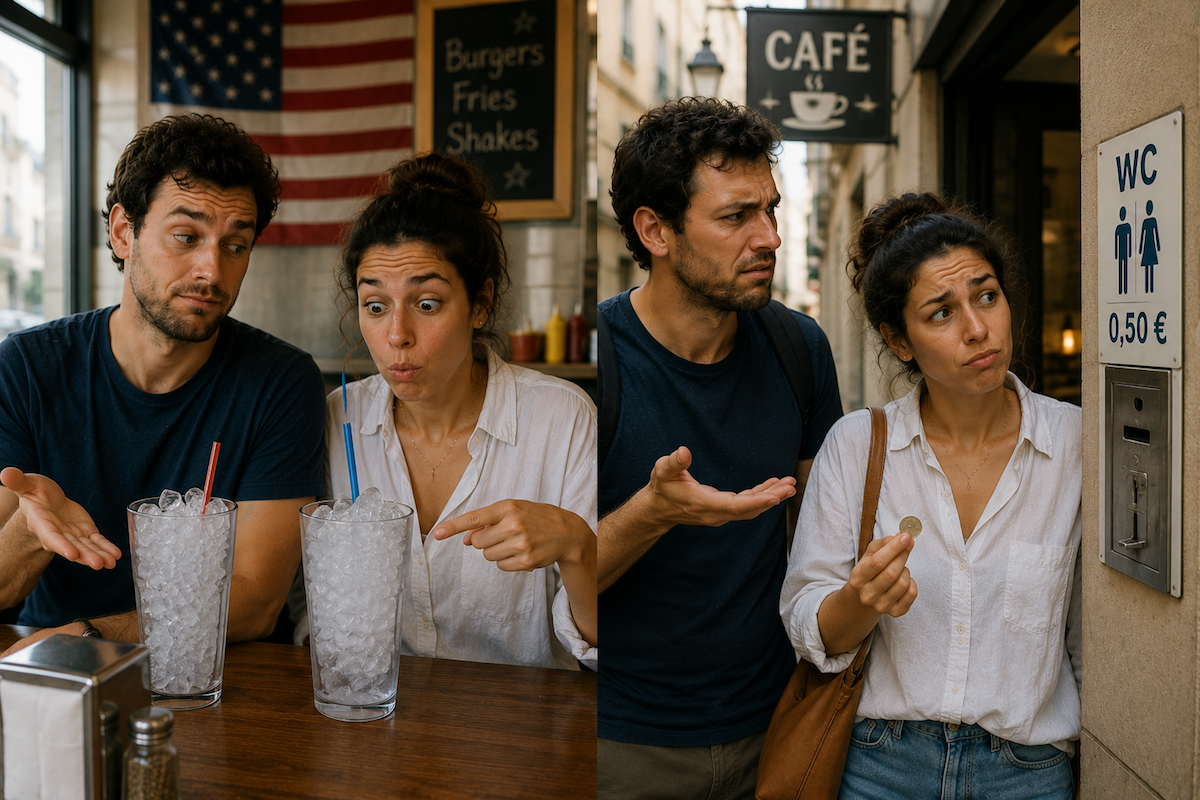
Why Living Abroad Slowly Turns Everyone Into A Hypocrite
I used to laugh when Europeans complained that Americans treat air conditioning like a constitutional right.
Then I spent a July at a Ukrainian dacha sweating through a tiny upstairs room with no AC, no airflow, and a mosquito circling my head like it had unresolved childhood trauma.
I woke up one night so dehydrated I briefly considered hugging the refrigerator for emotional support.
Suddenly, blasting Arctic air into every room back home didn’t seem quite so insane anymore.
But here’s where it gets interesting.
A former British colleague I knew in Kyiv once flew to Florida during August and said walking outside felt like “being slowly steamed alive inside a wet sock.”
This was the same guy who used to mock Americans for needing AC in springtime.
Funny how fast standards change when your environment starts punching back.
Living abroad taught me something nobody really talks about honestly.
Almost everybody has a list of things they swear they’d never tolerate.
Bad customer service. Tiny apartments. Broken bureaucracy. Noise. Isolation. Weird food. No privacy. No AC.
Then life abroad slowly starts renegotiating that list for you.
1. Americans Mock Europe’s Lack Of AC… Europeans Mock America Until They Visit Florida In August
My first summer in Kyiv felt like living inside a microwave wrapped in damp laundry. No AC. Windows open. Mosquitoes dive bombing my forehead at 3 AM while some shirtless guy outside screamed into a Nokia phone like the fate of Eastern Europe depended on it.
Back home, I used to think Americans overdid air conditioning. Then I spent a summer in Italy where even the walls felt sweaty.
Funny enough, a former colleague I taught with in Ukraine once flew to Florida in August and called me in complete psychological collapse. He said stepping outside felt like “breathing soup through a wet towel.”
Turns out everybody’s standards sound high and mighty until their internal organs start overheating.
It’s Intolerable Until: Your body starts negotiating directly with reality.
2. Americans Hate Bureaucracy Abroad… Foreigners Hate American Healthcare
I once spent nearly four hours in a government office in Ukraine because one document needed a stamp confirming another stamp was officially stamped.
One woman behind the desk looked at me with the emotional warmth of an unplugged refrigerator.
Meanwhile, a fellow traveler in Greece said the American healthcare system felt like arguing with a Greek internet provider, only with co-pays and a five thousand dollar mystery bill for a broken leg.
One country loses your paperwork.
The other loses your soul.
Locals in both places acted like this insanity was completely normal.
Eventually you stop asking whether the system makes sense and start asking what combination of documents, signatures, referrals, and patience might finally unlock the next level.
It’s Intolerable Until: You realize functioning inside the system matters more than understanding it.
3. Americans Think Europe Feels Unsafe… Europeans Think America Feels Unsafe
The first apartment building I entered in Kyiv looked like the opening scene of a low budget prison documentary.
It had it all: cheap cigarette stairwell funk, flickering lights, damp walls, Brezhnev era despair, and a strong Soviet interrogation room aesthetic.
My American brain immediately screamed,
“Absolutely not!”
Three months later, I barely noticed it anymore.
At the same time, I’ve watched Europeans stare at American news reports like the U.S. is one giant open carry theme park.
One French traveler I met in Saranda asked me why Americans need guns inside grocery stores. I honestly didn’t know how to answer without sounding insane.
That’s when I realized “safe” is usually just whatever chaos you grew up around.
People normalize repetition frighteningly fast. Noise becomes background. Dysfunction becomes routine.
It’s Intolerable Until: The unfamiliar becomes ordinary enough to stop setting off alarms in your head.
4. Americans Think Foreigners Are Cold… Foreigners Think Americans Are Fake
When I first arrived in Ukraine, I thought people hated me.
Nobody smiled. Cashiers looked annoyed by my existence. One guy in Donetsk answered a question with a shrug so aggressive it felt like emotional pepper spray.
Then I returned to the U.S. years later and watched a waitress introduce herself with the enthusiasm of a children’s television host on espresso.
Suddenly American friendliness started feeling weird too.
One Georgian friend told me Americans smile so much it makes him suspicious.
He said, “Why are these people grinning at me in supermarkets? What do they want?”
Honestly? Fair question.
The longer you live abroad, the stranger your own behavior starts to feel.
You catch yourself using a different voice in one country and a completely different sense of humor in another.
It’s Intolerable Until: You catch yourself performing different versions of yourself depending on the country you’re standing in.
Most people budget for the obvious stuff.
Flights. Apartments. Visas. Deposits.
But the real money often leaks out through what you didn’t know enough to question.
The wrong landlord. The “helpful” fixer. The bad lease. The surprise fee.
That’s where moving abroad gets expensive.
Slowly.
Through confusion, dependency, misplaced trust, and compromises that don’t feel serious until they start adding up.
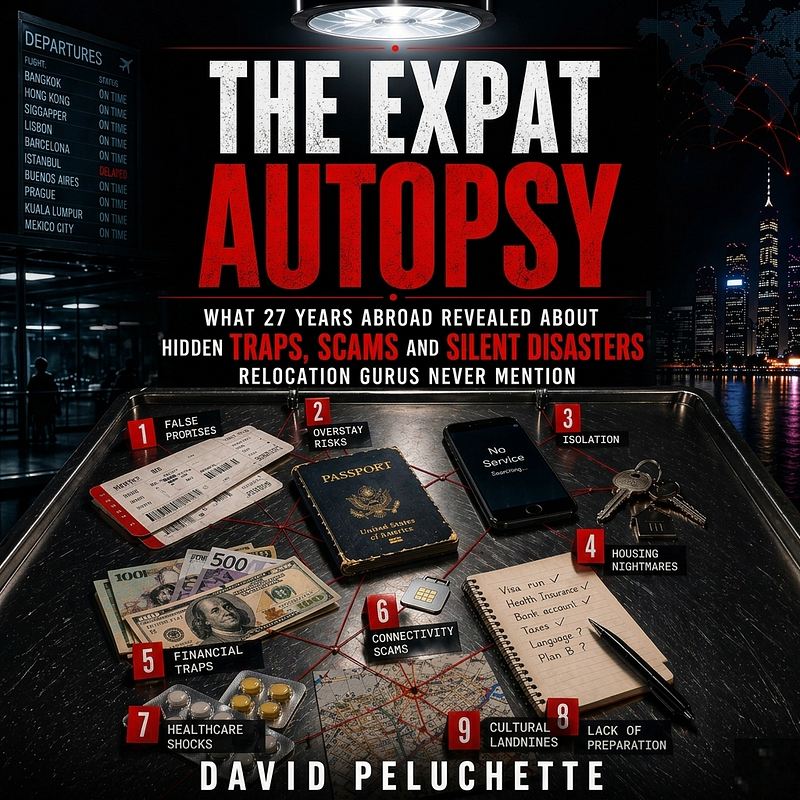
That’s the side of expat life I explore inside The Expat Autopsy ($47).
5. Americans Think Foreigners Depend Too Much On Community… Foreigners Think Americans Are Socially Isolated
In Ukraine, I was constantly amazed by how involved everybody was in each other’s lives. Family members showed up unannounced. Neighbors knew your business before you did.
Somebody’s grandmother was always trying to feed you enough food to survive nuclear winter.
At first, it felt intrusive.
Then I started noticing how lonely parts of America can feel by comparison.
One Romanian traveler I met in Greece told me the strangest thing about the U.S. wasn’t the food or the size of the cars. It was seeing elderly people sitting alone everywhere.
That one stuck with me.
Every culture gives something up to gain something else.
It’s Intolerable Until: You’re sick, your phone stops working, your landlord disappears, and suddenly “doing everything yourself” doesn’t feel nearly as impressive.
6. Americans Judge Corruption Abroad… Foreigners Judge America’s Corporate Influence
Living in Eastern Europe taught me there are countries where knowing the right person matters more than knowing the rules. Suddenly every problem has a “guy” who can fix things for a mysterious extra fee.
Americans love acting shocked by this.
Then foreigners visit the U.S. and see hospital bills that look like ransom notes, pharmaceutical commercials listing death as a side effect, and college tuition prices that could finance a small moon landing.
A French acquaintance once asked me why Americans tolerate prescription drug commercials during dinner. Halfway through explaining it, I realized it sounded completely unhinged.
That’s the uncomfortable part about living abroad. You start seeing your own country through outsider eyes.
It’s Intolerable Until: You’ve lived inside the system long enough for absurdity to start feeling normal.
7. Americans Think Bitter Expats Are Cynical… Foreigners Think Immigrants Romanticize America
Every expat city has them.
The old timers sitting in bars warning newcomers about visas, bureaucracy, burnout, or “how things really work here.”
I used to dismiss them too.
Then enough years passed abroad and I slowly started sounding like one of them.
Reality just sanded down their fantasies slowly.
Same thing happens to immigrants romanticizing America until they actually start dealing with the healthcare system, loneliness, debt, or work culture.
Living abroad eventually forces you to confront something uncomfortable.
Many of your opinions weren’t principles.
They were privileges built on familiarity.
It’s Intolerable Until: Reality humiliates your assumptions enough times to make you stop romanticizing everything.
The Strange Way Living Abroad Quietly Rewrites Your Standards
That’s the strange thing about living abroad.
People assume the hardest part will be the language, the paperwork, or figuring out why your landlord in Tbilisi disappears for three days every time something breaks in the apartment.
Turns out the real changes happen much more quietly than that.
Little by little, things that once felt impossible start feeling normal. The noise outside your window at 2 AM. The bureaucracy. The loneliness.
At first, you notice every difference.
Then you stop reacting to them.
After enough time abroad, you start realizing your “non negotiables” weren’t nearly as permanent as you thought they were.
Living abroad doesn’t just expose you to different countries. It exposes how conditional most of your standards actually are.
Most people think budgeting for a move abroad means covering the obvious costs.
Flights. Visas. Deposits. First month’s rent.
But the expensive part usually starts after arrival, when you don’t understand the system well enough to know what you’re walking into.
A bad assumption becomes a fee. A friendly favor becomes dependency. A small misunderstanding turns into a problem with rent, residency, banking, or trust.
That’s what The Expat Autopsy ($47) is built to expose.
The hidden pressure points influencers skip with their reels and videos, and relocation/residency gurus ignore with their glossy PDF packages.
The stuff most people only understand after the damage is done.
Not the dream.
The autopsy.

David Peluchette is a Premium Ghostwriter/Travel and Tech Enthusiast. When David isn’t writing he enjoys traveling, learning new languages, fitness, hiking and going on long walks (did the 550 mile Camino de Santiago, not once but twice!), cooking, eating, reading and building niche websites with WordPress.