
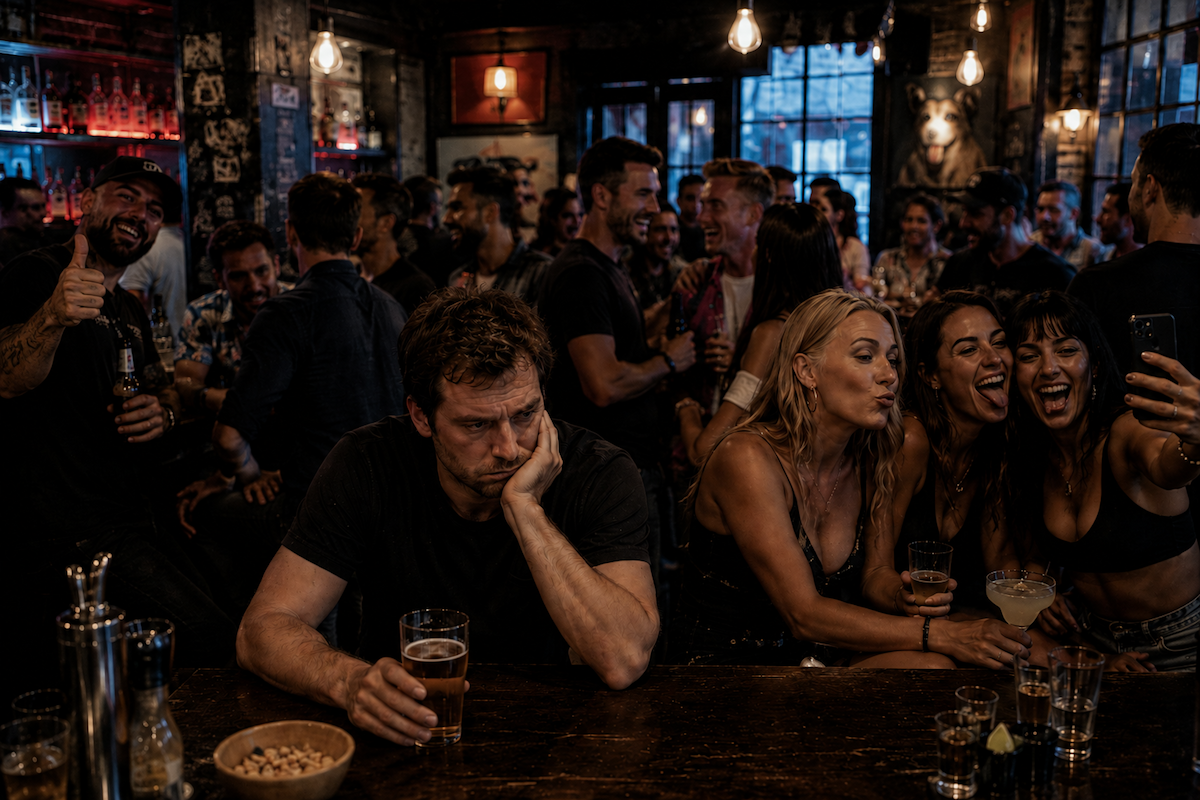
The Most Dangerous Isolation Abroad Happens In Crowded Bars, Facebook Groups, And Expat Communities
I once sat in a packed expat bar in Kyiv surrounded by people laughing, chain smoking on the balcony, shouting over bad Eurodance music in between tired renditions of Bon Jovi’s “It’s My Life,” and Neal Diamond’s “Sweet Caroline”, swapping the same travel stories I’d already heard three times before.
Everybody knew each other.
Nobody actually knew each other.
At first, expat life feels like instant community. You land in a new country, join a few Facebook groups, grab drinks with other foreigners, and suddenly you’ve got a social calendar fuller than the one you had back home.
It feels exciting.
Until you realize half the conversations revolve around visa problems, dating disasters, burnout, cheap beer, or somebody trying to borrow money again.
The longer I lived abroad, from Ukraine to Georgia to Albania, the more I noticed something uncomfortable hiding underneath all the “international family” nonsense.
Some of the loneliest expats weren’t isolated in tiny apartments eating instant ramen alone.
They were the people always out. Always social. Always drinking.
Then one day their relationship imploded. Or they trusted the wrong person. Or their entire life abroad started quietly falling apart while everybody around them kept ordering another round like nothing was happening.
That’s when I realized loneliness abroad doesn’t always look lonely at all.
1. The “Instant Family” Abroad Usually Isn’t Real
Nothing speeds up fake closeness faster than being confused in the same foreign country together.
I remember one expat meetup in Tbilisi where people were acting like war buddies within thirty minutes of meeting each other.
One guy was already calling everybody “family” or my “tribe” while aggressively recommending his crypto project and chain smoking on the balcony like a Balkan philosopher king.
At first, it feels comforting. You land somewhere unfamiliar, join a Facebook group or co-working space, grab beers with other foreigners, and suddenly you’ve got dinner plans every night of the week.
That’s when people start mistaking familiarity for trust.
Most expat friendships begin inside emotional vulnerability.
Everybody’s displaced, overstimulated, lonely, confused, or trying to reinvent themselves after blowing up some part of their old life back home.
That creates fast intimacy.
But, not necessarily real intimacy.
I learned pretty quickly in Kyiv that seeing the same people every weekend doesn’t mean they’d help you when things actually go sideways.
Half the people calling themselves a “community” disappear the moment money, stress, housing problems, or emotional instability enter the picture.
The Real Isolation: Some expat friendships feel deep because everyone’s lonely at the same time.
2. Expat Nightlife Can Become Emotional Camouflage
Some expats haven’t had a meaningful conversation in years. They’ve just gotten very good at staying socially occupied.
Spend enough time in expat bars abroad and you start hearing the same conversations on repeat like some kind of depressing international karaoke machine.
- Visa complaints.
- Dating disasters.
- Cheap rent.
- “How broken” their home country is.
- How much smarter they are than tourists.
Then everybody orders another round and acts like they’ve unlocked the secrets of life because they moved to Georgia and learned how to order khinkali.
I’ve seen this in Kyiv, Saranda, Athens, Krakow, even parts of Thailand. The social scene starts feeling less like friendship and more like emotional anesthesia.
People stay busy because silence forces them to think.
A former colleague of mine in Ukraine used to go out six nights a week.
Everybody knew him. Every bartender greeted him like a celebrity.
One night over beers he admitted he dreaded going home because he couldn’t remember the last time he enjoyed being alone with his own thoughts.
That stuck with me.
The Real Isolation: You can build an entire social life abroad that disappears the second you stop showing up.
3. Trauma Bonding Abroad Feels Like Real Connection Until It Doesn’t
Visa stress, culture shock, bad landlords, loneliness, bureaucracy. Nothing creates fast emotional attachment like surviving confusion together.
I once knew an expat in Kyiv who became inseparable with another foreigner after both got tangled up in residency problems after the Orange Revolution.
They spent weeks helping each other with paperwork, translations, government offices, and endless bureaucratic nonsense.
They called each other “brothers” after two months.
By month six, they were barely speaking after money got involved.
That’s the problem with trauma bonding abroad. Shared stress creates emotional shortcuts. Somebody helps you navigate a crisis and suddenly they feel safer, wiser, and more trustworthy than they actually are.
Loneliness speeds that process up even more.
People confuse emotional relief with character.
You see it constantly abroad:
- Roommates becoming codependent.
- Relationships accelerating at warp speed.
- Business partnerships forming after three drunken conversations and one visa disaster.
- Expats asking other expats for money.
Recently in Saranda, an expat I’d never met stopped me in a mini-market and asked me for money.
Not directions.
Not help translating something.
Money.
Later, the staff told me she’d been coming in for two days doing the same thing to other customers.
Basically, panhandling as an expat in a country poorer than the one she came from.
That one stuck with me, because by the time someone reaches that point abroad, the real collapse probably started long before the mini-market.
The Real Isolation: Shared chaos can feel a lot like trust in the beginning.
Most people imagine life abroad falling apart through one massive catastrophe.
A visa problem that suddenly gets expensive.
Or a “helpful” person who turns out to be the wrong person to trust.
But after years abroad, I started noticing something quieter underneath many of those disasters:
- Isolation.
- Lonely people move in too fast.
- Hand money to people they barely know.
- Trust the first person who explains the local system.
- Ignore obvious red flags because starting over socially feels exhausting.
The real damage often begins long before the actual collapse.
It begins when loneliness slowly distorts judgment, trust, leverage, and decision making.
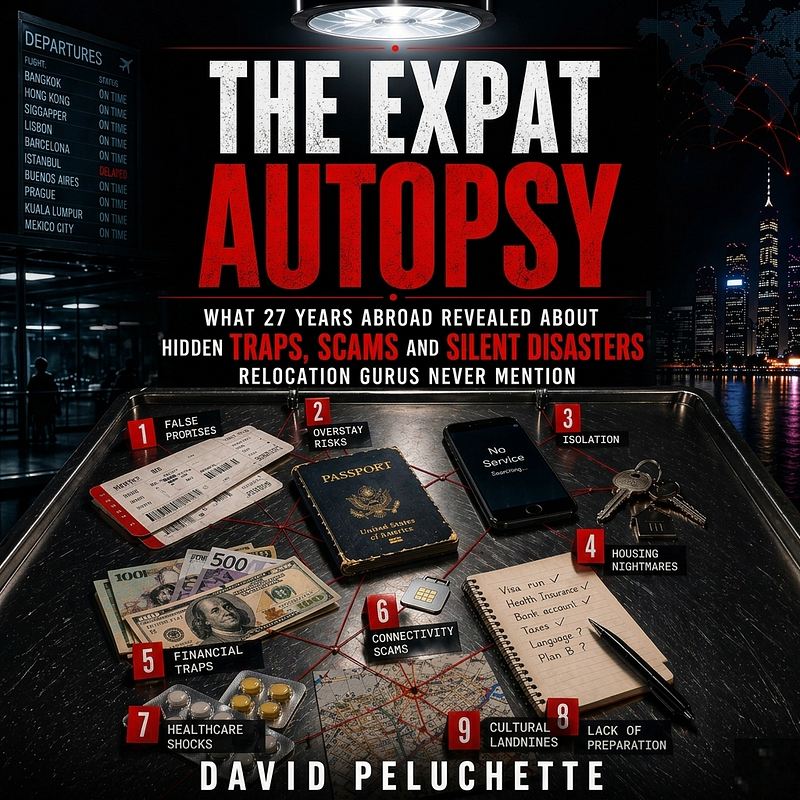
That’s one of the deeper patterns explored inside The Expat Autopsy ($47).
4. Lonely Expats Start Making Decisions They’d Never Make Back Home
Lonely people start saying yes to things they normally would’ve questioned immediately.
I met a guy in Tbilisi who moved into an apartment with another expat after knowing him for less than a week. Two months later the roommate vanished owing rent, utility bills, and half the apartment deposit.
Back home, he never would’ve trusted someone that quickly.
Abroad, loneliness compresses people’s decision making.
Starting over socially abroad is exhausting, so people cling to flaky groups and ignore the gut feeling telling them something’s off.
That’s where some really ugly situations begin, from bad relationships to sketchy business deals with people who can smell emotional dependency from a mile away.
The scariest part is that most people don’t even realize their standards are changing while it’s happening.
The Real Isolation: Loneliness doesn’t just affect emotions. It changes judgment.
5. Some Expats Haven’t Been Honest With Themselves In Years
Some people move abroad for adventure. Others move because they’re quietly trying to escape themselves.
After enough years abroad, you start meeting expats who seem emotionally frozen in time.
- Same bars.
- Same stories.
- Same complaints.
- Same drunken rant about how they could “never go back home.”
I met guys in Kyiv twenty years apart who somehow felt identical.
One was ranting about local corruption in 1999.
Another was ranting about the exact same thing in 2019 while wearing cargo shorts and trying to flirt with university students young enough to be his daughter.
At some point, reinvention quietly turns into avoidance.
That’s the uncomfortable side of expat life nobody likes talking about online. Sometimes moving abroad really does transform people for the better.
Sometimes it just gives people new scenery for old problems.
The Real Isolation: A passport changes your location faster than your patterns.
6. The Healthiest Expats Usually Look The Least Exciting Online
The people surviving abroad the best usually aren’t the loudest people in the room.
They’re usually the ones with smaller social circles, realistic expectations, stable routines, and enough self-awareness to know that moving abroad doesn’t magically turn life into a permanent vacation.
It’s still bills, boredom, awkward conversations, loneliness, and occasionally wondering why your washing machine sounds like it’s preparing for takeoff.
One of the most emotionally stable expats I knew in Georgia barely posted online at all.
None of that fake “living my best life” nonsense or inspirational airport quotes like some budget philosopher trapped inside an Instagram reel.
He had routines. Boundaries. Local friends. Savings. Backup plans.
Honestly, he looked boring.
Which is probably why he was doing better than most people around him.
The Real Isolation: The people most prepared for life abroad usually look less glamorous online because they stopped confusing excitement with stability.
The Loneliest Expats Usually Look Fine From The Outside
The loneliest expats aren’t always the people living alone in tiny apartments.
Sometimes they’re the people constantly surrounded by bars, weekly fake and forced “meet up” events, Facebook groups, drinking buddies, and temporary friendships that never become real support systems.
Life abroad strips away things most people never realized they depended on back home. Familiar social rules. Long term trust. Emotional grounding. Stable routines.
Take those away too quickly and people don’t always become freer.
Sometimes they become easier to manipulate and easier to isolate, which is exactly when life abroad starts getting expensive.
That’s the side of expat life most relocation influencers never talk about because beaches, cheap cocktails and escape sell better than loneliness.
That’s exactly why I wrote The Expat Autopsy.
Not as another glossy “move abroad” fantasy guide, but as a deeper look at the social pressures and emotional blind spots that unravel people abroad long before they understand what’s happening.
So now I’m curious.
What’s the loneliest moment you’ve ever experienced abroad even while surrounded by people?
The Expat Autopsy ($47)

David Peluchette is a Premium Ghostwriter/Travel and Tech Enthusiast. When David isn’t writing he enjoys traveling, learning new languages, fitness, hiking and going on long walks (did the 550 mile Camino de Santiago, not once but twice!), cooking, eating, reading and building niche websites with WordPress.