
Free Refills, Free Condiments, Giant Portions, and Endless Choices Felt Like Freedom Until Living Abroad Made Me Question Everything
The biggest culture shock I experienced after moving to Ukraine wasn’t in Ukraine.
It happened when I came back to America.
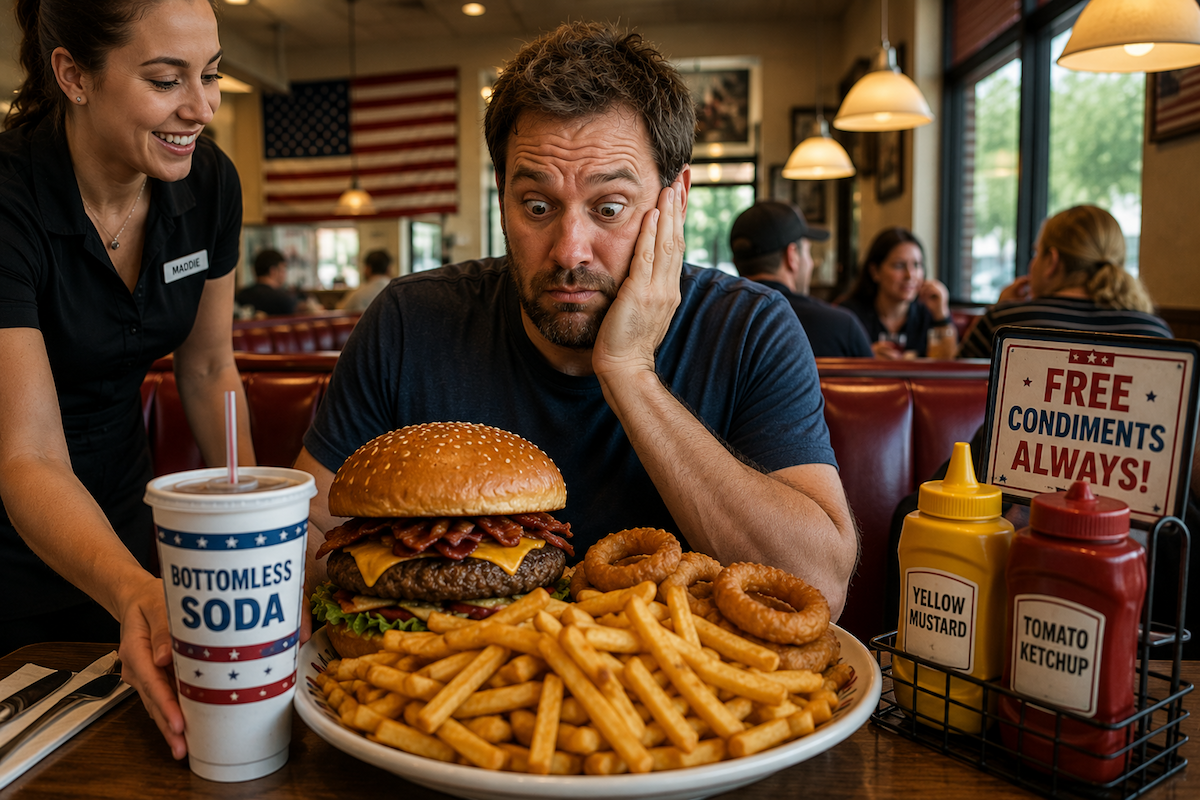
Within twenty four hours, I’d already had multiple free soda refills, wandered through a supermarket so big it made the ones in Kyiv look like corner stores, and been served a restaurant meal large enough to feed half my ex-girlfriend’s family at their dacha.
At first, it felt awesome.
Like I’d finally been reunited with all the little freedoms I’d missed while living abroad.
Then something strange happened.
A few weeks later, I found myself standing in the snack aisle staring at hundreds of options I didn’t actually want.
Back in Ukraine, Georgia, France, or even here in Albania, food had always been something I thought about when I was hungry.
Back in the U.S., it seemed like food was thinking about me.
Everywhere.
All the time.
The more I settled back into American life, the more I started noticing things I’d never questioned growing up.
- Why was every portion enormous?
- Why did every craving have an instant solution?
- Why did I suddenly feel surrounded by food twenty four hours a day?
The strangest part?
The very things I’d missed most while living abroad were starting to look less like freedoms and more like traps.
Here are seven American food freedoms I thought I’d missed for years until I realized they might have been costing us far more than we think.
1. Cheap Processed Food Feels Like Abundance Until You See What Other Countries Won’t Sell
One of the biggest shocks I get every time I return to the U.S. is walking into a supermarket.
At first, it’s magical.
Aisles packed with brightly colored snacks. Cereals that look like they were designed by a committee of sugar-addicted cartoon characters. Entire sections devoted to foods I forgot even existed.
Then I remember something that happened while living in France.
I was looking for a childhood favorite when a local explained that a version of it wasn’t sold there because of certain ingredients. That was the moment I started paying attention to what was actually inside many of the foods I’d grown up eating.
The U.S. offers some of the cheapest calories on earth.
The problem is that convenience and quantity often wins the battle against quality.
The Food Freedom Trap: When abundance means unlimited access to cheap processed food, quantity quietly starts replacing quality.
2. Free Refills Feel Like Freedom Until Soda Becomes Automatic
I used to think free refills were one of America’s greatest inventions.
Then I moved to Ukraine.
The first time I asked for another Coke in Kyiv, I got another check.
The same thing happened when I wanted extra ketchup at a restaurant. It wasn’t sitting in a giant dispenser waiting for me. It came in a small packet, and yes, I paid for it.
France wasn’t much different. Every drink was a separate purchase. Extra sauces and condiments often came with an extra charge. Nobody seemed offended by it. Nobody even questioned it.
What surprised me wasn’t the lack of free refills or the absence of an all-you-can-pump ketchup station.
It was how little people cared.
Most people finished one drink and moved on with their lives. Nobody sat there consuming a gallon of soda because the cup happened to be bottomless. Nobody was covering their fries with enough ketchup to qualify as a vegetable serving.
Back in the U.S., we’ve become so accustomed to unlimited refills and free condiments that taking more often becomes automatic.
The question isn’t whether we need more. The question becomes why not?
The Food Freedom Trap: Unlimited refills and endless free condiments remove the moment when you stop and ask yourself whether you actually want more.
3. Giant Portions Feel Like Value Until Your Body Pays the Difference
Returning to America after years abroad feels like entering an eating competition you never signed up for.
The first restaurant meal always looks impressive. Huge plates. Mountains of fries. Portions that could easily feed two people.
In France, Spain, and Greece, I often remember initially feeling disappointed when food arrived.
“That’s it?”
Then something unexpected happened.
I finished the meal.
I felt satisfied.
I wasn’t searching for Tums an hour later.
Somewhere along the way, many of us started confusing quantity with value.
The Food Freedom Trap: Getting more food for your money often means eating far more than your body actually wants.
4. Endless Menu Choices Feel Exciting Until Every Meal Becomes a Decision Marathon
I once opened a menu at an American diner in Connecticut and felt like I was reading a short novel.
Page after page.
Burgers. Wraps. Salads. Pasta. Breakfast items. Desserts.
By the time I finished reading the menu, I needed a nap.
Meanwhile, some of my favorite restaurants in France and Georgia offered only a handful of specialties. The menu was short because they focused on making those dishes exceptionally well.
Oddly enough, ordering became easier.
The meal became more enjoyable.
Nobody was suffering from a shortage of options.
The Food Freedom Trap: When everything is available, choosing starts feeling like work.
5. Twenty Four Hour Food Access Feels Convenient Until Nothing Feels Special Anymore
One thing the U.S. does remarkably well is making sure you’re never far from food.
Hungry at midnight?
Problem solved.
Hungry at three in the morning?
Still got you covered.
After living in smaller cities and towns abroad, I noticed something interesting. When restaurants closed, people adjusted. Meals happened at certain times. Eating had a rhythm.
Back home, food often feels like background noise.
It’s always there waiting for us.
The Food Freedom Trap: When food is available every hour of the day, eating becomes automatic instead of intentional.
6. Drive Thrus Save Time Until Meals Disappear From Daily Life
Americans love efficiency.
Nobody understands this better than a nation capable of ordering lunch, paying for it, receiving it, and driving away without ever leaving the driver’s seat.
The first time I returned home, I was thrilled to see drive thrus again.
A few months later, I started missing something.
Long lunches in Spain.
Afternoons sitting in Greek tavernas.
Conversations that lasted longer than the meal itself.
Food abroad often felt connected to people.
Food back home… often felt connected to traffic.
The Food Freedom Trap: Saving a few minutes can cost one of the most enjoyable parts of the day.
7. Massive Grocery Stores Feel Amazing Until Food Becomes Entertainment
I really love American supermarkets. Walking into one after years abroad feels like entering Disneyland for hungry adults.
Every aisle offers another temptation.
- A new flavor.
- A limited edition product.
- Free samples.
- Two for one’s.
- Something you weren’t planning to buy until like, five seconds ago.
The problem is that shopping slowly stops being about food.
It becomes entertainment.
You arrive needing milk and eggs.
You leave with enough snacks to survive a minor natural disaster.
Confession time..
“I’ve done it more times than I’d like to admit.”
The Food Freedom Trap: The more choices surrounding us, the harder it becomes to tell the difference between hunger and temptation.
Maybe Freedom Was Selling Us More Than We Needed
For years, I genuinely missed these things whenever I lived abroad.
- The free refills.
- The giant portions.
- The endless choices.
- Free samples.
Coming home felt like reconnecting with a part of America I’d always loved.
Then living abroad gave me something more valuable than nostalgia.
It gave me perspective, with enough distance to notice that many of these freedoms come with hidden costs.
Food that’s always available.
Portions that keep growing.
Choices that never seem to end.
I’m not suggesting the U.S. should become France, Greece, or Ukraine.
Every country gets some things right and some things wrong.
All I’m suggesting is that sometimes you have to leave home before you can see it clearly.
So let me ask you this:
Which of these American food freedoms genuinely makes life better?
Which one has become the biggest Food Freedom Trap of them all?
I’d love to hear your answer in the comments.
Living abroad, or seriously thinking about it? Do you have a Plan B?
Expats Planet helps expats and future expats know what can go wrong, how to avoid it, and what to do if things go sideways anyway.
The Expat Backroom
A quick note: I’ve added a private Expat Backroom section to the Substack version of this piece.
The public article here is complete, but the Backroom is where I add the more candid version behind selected stories: what I left out, what I think really happened, and the sharper life-abroad lesson underneath it.
Read about The Expat Backroom here.

David Peluchette is a Premium Ghostwriter/Travel and Tech Enthusiast. When David isn’t writing he enjoys traveling, learning new languages, fitness, hiking and going on long walks (did the 550 mile Camino de Santiago, not once but twice!), cooking, eating, reading and building niche websites with WordPress.