
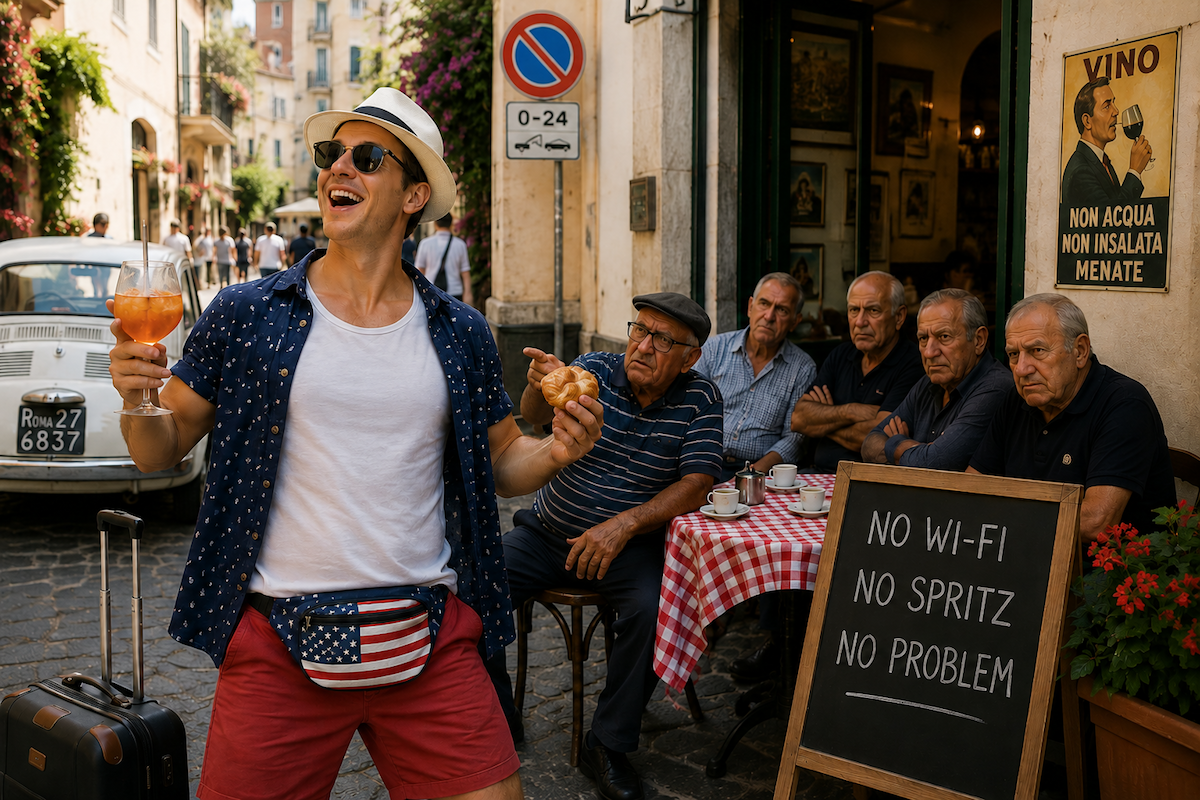
The Hidden Tradeoffs of the Things Americans Are Told to Admire
For years, I was that guy.
The American constantly looking at life abroad and saying, “See? They do it better.”
- No tipping.
- Long lunches.
- Less obsession with work.
- People minding their own business.
After living in Ukraine, France, Georgia, and now Albania, I collected a long list of things I thought foreign cultures had figured out better than America.
Then I made the mistake of actually living with them.
That’s when I discovered something travel influencers rarely mention.
Every culture solves a problem by creating a new one.
The long lunches started swallowing entire afternoons. The relaxed attitude toward time felt refreshing until I was the one standing around waiting.
The strong sense of community sometimes came with a surprising lack of privacy.
Turns out, every cultural upgrade comes bundled with a few hidden tradeoffs.
Most of us notice the benefits when we’re visiting, but only discover the costs once we’ve unpacked, paid rent, and started dealing with daily life.
Here are seven foreign customs that seemed refreshing… until real life got in the way.
1. Those Long, Relaxed Meals That Quietly Devoured My Entire Afternoon
One of the first things I fell in love with in France was how seriously people treated lunch.
Back home, lunch was something you inhaled between errands and staring at your inbox. In a mid-sized town in Alsace, lunch felt like an event.
People sat down, talked, ate slowly, ordered another drink, and seemed completely unbothered by time.
At first, I thought they’d figured life out.
Then one afternoon I met a friend for what I assumed would be a quick lunch.
Three hours later, we were still sitting there.
The food was excellent and the conversation was great. The problem was that my entire afternoon had vanished like a magician’s assistant.
The bank was closed, the post office had locked its doors, and the errands I’d planned had been kicked into tomorrow.
That was when I realized there was a difference between visiting a culture and living inside it.
Slow living sounds great when you’re on vacation.
It’s more complicated when you’ve got bills to pay, you’ve spent three hours at lunch, and somehow accomplished absolutely nothing all day.
The Hidden Tradeoff: Slow living is awesome until you’re trying to get something done.
2. The No Tipping Dream That Sometimes Came With No Sense Of Urgency
Let’s be honest, most Americans dream about escaping tipping culture.
I know I did.
The idea sounded fantastic. No mental math. No guilt. No wondering whether leaving 18 percent instead of 20 percent made you a terrible human being.
Then I started living in countries where tipping wasn’t expected.
At first, it felt liberating.
Then came the café experiences.
I remember sitting at a café terrace in France after finishing my coffee and pastry. I was ready to leave.
The waiter wasn’t.
I waited.
Five minutes.
Ten minutes.
Fifteen.
Twenty…
At one point I wondered whether I’d accidentally signed a long-term lease on the table.
Nobody else seemed bothered. The locals were chatting, and the waiter wasn’t rushing.
Life was simply happening around me at its own pace.
Back in the U.S., a server would’ve appeared several times by then asking if I needed anything else. Then the check would land before I’d even decided if I wanted dessert.
One system can feel exhausting. The other can test your patience like a government office with fluorescent lighting.
The Hidden Tradeoff: Relaxed service can sometimes feel a little too relaxed.
3. Less Small Talk Felt Refreshing Until It Started Feeling Cold
One of the biggest culture shocks I experienced in Ukraine wasn’t the language, the food, or even the brutal winters.
It was the silence.
Back in the United States, you can end up discussing your weekend plans with a cashier before you’ve even paid for groceries.
In Kyiv, most people weren’t interested in that game.
At first, I loved it.
No fake smiles. No stranger asking how my day was going when we both knew they didn’t care.
It felt honest.
Then one day I realized something felt off.
Some days I could ride the metro, buy groceries, and walk home without speaking to a single person.
After a few years abroad, I found myself missing something I never thought I’d miss.
American cashiers.
The Hidden Tradeoff: Less fake friendliness can sometimes mean less friendliness altogether.
4. Flexible Time Sounds Wonderful Until You’re The One Waiting
When I first moved abroad, I thought Americans were obsessed with punctuality.
Everything seemed scheduled, timed, and measured down to the minute.
People acted like arriving six minutes late was a federal crime.
Then I spent enough time in Southern Europe and the Balkans to discover the opposite extreme.
One evening in North Macedonia, I arranged to meet someone for beer.
We agreed on 6:00 p.m.
At 6:15om, I wasn’t worried.
At 6:30pm, I started checking my phone.
At 6:45pm, I began wondering whether I’d somehow gotten the date wrong.
They eventually arrived smiling like nothing unusual had happened.
To them, nothing had.
The schedule was merely a suggestion. The time, a rounding number.
The funny thing is that this attitude creates far less stress for everyone involved.
Until you’re the one sitting alone at a bar watching your beer go flat.
After enough experiences like that, I started understanding why Americans love calendars so much.
The Hidden Tradeoff: Someone always pays for flexibility.
5. Escaping Hustle Culture Also Meant Fewer Doors Opened
One thing many Americans envy about Europe is the work-life balance.
I know I did.
Long vacations. Protected holidays.
People actually disconnecting from work without feeling guilty about it.
The French even created the “35-hour work week” back in the 90s. Compared to America’s hustle culture, it looked like paradise.
For a while, it felt like paradise too.
Then I started noticing something else.
Many of my friends abroad weren’t burning themselves out trying to climb the corporate ladder. The problem was that there often wasn’t much ladder to climb.
Career changes were harder. Salaries grew more slowly.
Strict employment regulations made firing difficult, which also made hiring more cautious.
Opportunities that seemed plentiful in the United States were sometimes limited or wildly competitive.
Every system prioritizes something.
The U.S. often prioritizes opportunity, sometimes at the expense of sanity.
Other countries prioritize stability, sometimes at the expense of mobility.
Both come with a bill attached.
The Hidden Tradeoff: Less pressure often comes with fewer possibilities.
6. Strong Family Ties Can Make Privacy A Luxury
One thing I genuinely admire in countries like Ukraine, Albania, and Georgia is how important family is.
Grandparents aren’t shoved off into an old folks home and forgotten about until Christmas. They’re often deeply involved in everyday life.
Families help each other. They show up when they’re needed.
Coming from the U.S., where independence is practically a national religion, I found that refreshing.
Then I started noticing something else.
When everyone is involved, everyone is… involved.
A friend in Ukraine once got several phone calls from family members in the same day asking why she hadn’t visited recently.
By lunchtime, her mother, aunt, sister, and grandmother had all checked in.
Nobody thought this was unusual except me.
The support system was incredible. The downside was that disappearing for a few days without explaining yourself wasn’t really an option.
These days, I appreciate close family ties a lot more than I used to.
I also appreciate a little space.
The Hidden Tradeoff: The closer the community, the fewer places there are to hide.
7. I Thought Efficiency Was The Problem Until I Lived Without It
For years, I thought Americans were in too much of a hurry.
Everybody seemed busy. Lunch was something you wolfed down on the way to something.
Then I moved abroad and found myself wishing people would hurry up.
I remember dealing with some bureaucratic task in Ukraine that should’ve taken an afternoon.
Days later, I was still chasing stamps, getting lost, filling out forms, and getting sent to offices that seemed to think I had nothing better to do all day.
The funny thing was that nobody else seemed bothered.
People waited patiently while I wondered how something so simple had become a part-time job.
After enough experiences like that, I started appreciating efficiency a lot more than I used to.
Spending half your day getting one stupid thing done will do that to a person.
The Hidden Tradeoff: Not everything slow is meaningful.
Sometimes it’s just slower.
Every Culture Sends You The Other Half Of The Story
For a long time, I made the same mistake a lot of expats make.
I’d compare the best parts of one culture to the most annoying parts of another, then wonder why life abroad looked so much better on paper.
After enough years living in different countries, I started noticing that every place has its own headaches.
The long lunches are great until you’ve got things to do.
Close-knit communities are wonderful until everybody knows your business.
A relaxed pace sounds appealing right up until you’re the one waiting around trying to get things done.
Strong job protections feel reassuring until you’re trying to get your foot in the door.
None of that means life abroad isn’t worth it.
I’d do it all over again tomorrow.
It just means every country comes with its own set of frustrations, and sooner or later you’ll have to decide which tradeoffs you’re happiest living with.
That’s probably the biggest thing I’ve learned after all these years.
There isn’t a perfect culture hiding somewhere out there.
There’s only the one whose imperfections bother you a little less than the others.
What cultural tradeoff surprised you the most while living or traveling abroad?
Living abroad, or seriously thinking about it? Do you have a Plan B?
Expats Planet helps expats and future expats know what can go wrong, how to avoid it, and what to do if things go sideways anyway.
The Expat Backroom
A quick note: I’ve added a private Expat Backroom section to the Substack version of this piece.
The public article here is complete, but the Backroom is where I add the more candid version behind selected stories: what I left out, what I think really happened, and the sharper life-abroad lesson underneath it.
Read about The Expat Backroom here.

David Peluchette is a Premium Ghostwriter/Travel and Tech Enthusiast. When David isn’t writing he enjoys traveling, learning new languages, fitness, hiking and going on long walks (did the 550 mile Camino de Santiago, not once but twice!), cooking, eating, reading and building niche websites with WordPress.