
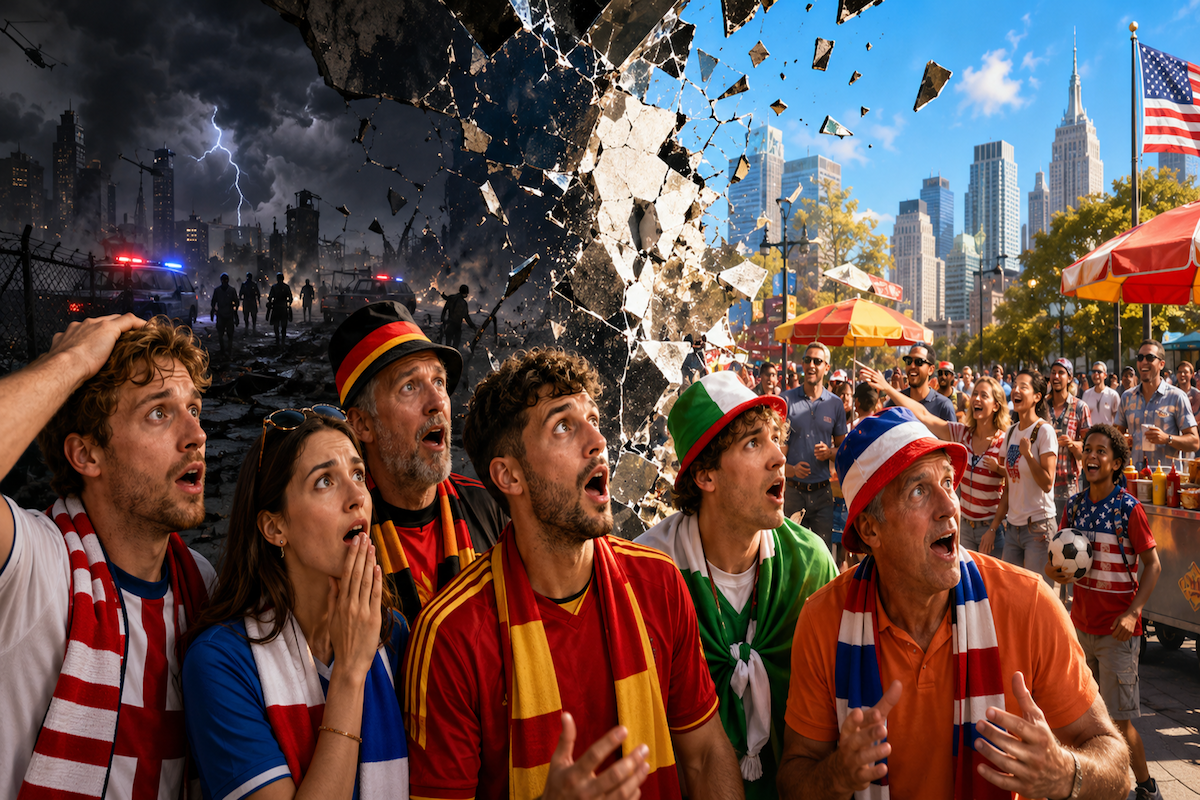
After Years of Hearing America Was Dangerous, Unfriendly, and Falling Apart, Thousands of European Fans Discovered a Very Different Country.
They came to America expecting chaos, hostility, and a country on the verge of collapse.
Within hours, that entire narrative started to unravel.
For thousands of fans arriving for the 2026 World Cup, the surprise came almost immediately, as one warning after another failed to match what they were seeing.
I’ve lived long enough in places like France, Ukraine, Albania, and Georgia to know that every country has a reputation.
The funny part?
Those reputations tell you more about the people repeating them than the country itself.
Thousands of football fans landed in the U.S. expecting suspicious strangers, bad news, and cities that looked like they were one step away from collapse.
Instead, they found people chatting to them in line, strangers holding doors open, free drink refills, and Mexican restaurants that kept bringing basket after basket of chips and salsa before anyone had even ordered.
For many visitors, the biggest shock wasn’t what happened inside the stadiums.
It was watching one American stereotype after another collapse before kickoff.
Quick note: When so many American stereotypes collapse in real life, it raises a bigger question.
How many of our beliefs about other countries come from headlines instead of experience?
Maybe you dream of moving abroad, or maybe you’re already there wondering, “Is life abroad really for me?”
That question hits closer to this story than you might think.
So, let’s take a look at nine stereotypes World Cup visitors expected America to confirm… only to discover reality was a whole lot more complicated.
1. Americans Actually Talk to Strangers
After years of living in places like France, Ukraine, Albania, and Georgia, I’d almost forgotten how aggressively friendly Americans can be.
You’re standing in line, and suddenly the guy behind you wants to know where you’re from, who you support, and whether you’ve tried the BBQ place three blocks away.
Many World Cup visitors expected Americans to be suspicious, distant, or too wrapped up in their own lives to care.
Instead, strangers offered directions, recommended local restaurants, explained bus routes, and welcomed fans as though they’d been personally assigned by the tourism board.
For some Europeans, all that smiling and small talk probably felt suspicious.
What did this person want?
Usually, nothing.
What World Cup Visitors Learned: American friendliness can feel overwhelming when you’re not used to it, but it’s often genuine.
Ask locals where to eat, what to see, or which neighborhood to explore, and you may get better advice than anything in your guidebook.
Stereotype Status: Busted. Sometimes friendliness isn’t hollow or fake. It’s simply part of American culture.
2. “Wait… You Mean the Refills Are Free?”
The first free refill can be a confusing moment.
A server appears with another Coke before you’ve finished the first one. Then comes the ice water, the coffee top up, and a basket of chips and salsa before anyone has even looked at the menu.
Visitors from Europe often assume there must be a catch.
I remember asking for a second drink in France and discovering that “refill” simply meant “buy another one.” In the U.S., the glass keeps filling itself like some glorious carbonated miracle.
Nobody arrives with a calculator, or adds a mysterious chip fee to the bill.
What World Cup Visitors Learned: In many American restaurants, free refills, ice water, coffee, and extras are built into the experience.
Check the menu or ask the server, then enjoy it without expecting a financial ambush.
Stereotype Status: Busted. Americans often build value into the meal instead of charging for every little extra.
3. Portion Sizes Really Are Ridiculous… And Somehow Wonderful
This stereotype didn’t collapse.
It arrived on a plate the size of a satellite dish.
One visit to a classic diner, a BBQ restaurant, or the Cheesecake Factory can make a European portion look like an appetizer.
The burger comes with fries, the fries come with more fries, and the slice of cake appears large enough to require planning permission.
Then visitors discover the doggie bag.
Taking leftovers home is normal, which means that enormous dinner may also become breakfast, lunch, or emergency hotel-room food after the match.
What World Cup Visitors Learned: Don’t order too much. Share dishes, ask about portion sizes, and take the leftovers with you. Nobody will think you’re rude.
Stereotype Status: Confirmed… with a Catch. America doesn’t just serve food. It serves abundance.
4. The Food Was Better Than We Were Told
Spend enough time living in Europe like I have, and you’d think American food begins and ends with drive thru burgers and supersized sodas.
That’s the impression many overseas visitors arrived with.
Then they started wandering beyond the nearest fast food chain.
One day it was slow smoked Texas style BBQ. The next it was fresh Gulf seafood, New England clam chowder, Southern comfort food, Tex Mex that actually tasted Mexican, farmers markets overflowing with local produce, and diners serving breakfasts large enough to fuel a marathon.
America’s biggest culinary secret isn’t that the food is healthier.
It’s that it’s far more regional, diverse, and delicious than people ever expected.
What World Cup Visitors Learned: Don’t judge American food by the nearest fast food restaurant. Ask locals where they eat, try the regional specialties, and you’ll discover there’s no such thing as one “American cuisine.”
Stereotype Status: Mostly Busted. American food is far more diverse than burgers and fries.
5. Americans Really Do Smile That Much
I’ll admit it.
After spending years living in Ukraine and France, coming back to the U.S. sometimes gives me culture shock too. People smile at you. Cashiers ask how your day’s going. Hotel staff seem excited you’ve arrived.
At first, many overseas visitors wondered whether employees were following a company script.
Then they noticed it wasn’t just the hotel receptionist.
It was volunteers at the stadiums. Restaurant servers introducing themselves by name. Fellow fans asking whether they were enjoying their trip.
Complete strangers wishing them a great day as they walked away.
You don’t have to love that style of service.
But you do notice it.
What World Cup Visitors Learned: Don’t assume every smile has an ulterior motive. Hospitality is something many Americans genuinely take pride in, especially when welcoming visitors from around the world.
Stereotype Status: Busted. American hospitality is one of the country’s greatest strengths.
6. America Felt Safer Than Many Expected
Years of international headlines convinced plenty of visitors they needed to keep looking over their shoulder.
Some arrived expecting every city to feel tense, dangerous, or unpredictable.
Instead, many found themselves comfortably wandering downtown streets, chatting with fellow fans before matches, exploring neighborhood pubs recommended by locals, and realizing everyday life felt surprisingly… ordinary.
That doesn’t mean every place is safe.
No country works that way, and anyone who’s traveled through Europe knows every city has areas where common sense matters.
What World Cup Visitors Learned: Don’t let headlines become your entire travel guide. Research the places you’re visiting, follow the same precautions you’d use anywhere else, and judge destinations by your own experience rather than someone else’s television screen.
Stereotype Status: More Complicated Than the Headlines. Everyday life rarely looks like the evening news.
7. Americans Love Showing Off Their Country
Mention you’re visiting from France, Germany, or Spain, and suddenly every American within earshot becomes an unpaid tour guide.
They’ll tell you where to eat, what road to take, which local dish you must try, and why their town is better than the one next door. Most of the time, they’re not showing off. They’re genuinely excited that you came.
What World Cup Visitors Learned: Ask locals for recommendations. Their favorite diner, BBQ joint, sports bar, or scenic route may become the best part of your trip.
Stereotype Status: Busted. Americans often become unofficial tour guides the moment they hear an accent.
8. The Scale of Everything Is Difficult to Explain
The highways look endless. The pickup trucks resemble armored vehicles. Walmart feels large enough to require a map and emergency supplies.
Then come the stadiums, parking lots, national parks, and driving distances that make a two-hour trip sound “pretty close.”
Even after years of traveling, America’s scale still catches me off guard.
What World Cup Visitors Learned: Leave more travel time than you think you’ll need. Distances that look short on a map can swallow half your day.
Stereotype Status: Completely Confirmed. America isn’t just big. It’s built on another scale.
9. The America on TV Isn’t the America They Met
The World Cup didn’t erase America’s problems, and visitors weren’t blind to them.
What surprised many was how little everyday life resembled the version they’d seen on television.
The headlines showed crime, division, and political chaos.
The people they met offered directions, shared restaurant tips, and welcomed them into conversations.
Real life turned out to be far less dramatic.
What World Cup Visitors Learned: News can explain a country’s problems, but it can’t fully explain its people. The best way to understand the U.S. is to speak with Americans.
Stereotype Status: Completely Busted. Everyday America is more complicated, and often kinder, than the headlines suggest.
What Fell Apart Wasn’t America… It Was the Stereotypes
The 2026 World Cup introduced visitors to more than stadiums and football.
It introduced them to the American people.
Long after they’ve forgotten the final score, many will remember the server who kept refilling their drink, the stranger who recommended a local bar or restaurant, and the person in line who made them feel welcome.
Countries are always more complicated than their reputations.
Which American stereotype surprised you the most?
Life abroad is incredible. Whether you dream of moving abroad or you’re already abroad and having second thoughts, Expats Planet exists to answer that one question, “Is life abroad really for me?”.
The Expat Backroom gives you the more candid layer behind my public stories. Is Life Abroad Really For Me? is the guide that helps you think through that question for yourself. A Private Conversation lets you talk through your own situation with me directly.
The Expat Backroom
A quick note: I’ve added a private Expat Backroom section to the Substack version of this piece.
The public article here is complete, but the Backroom is where I add the more candid version behind selected stories: what I left out, what I think really happened, and the sharper life-abroad lesson underneath it.
Read about The Expat Backroom on Substack here.

David Peluchette is a Premium Ghostwriter/Travel and Tech Enthusiast. When David isn’t writing he enjoys traveling, learning new languages, fitness, hiking and going on long walks (did the 550 mile Camino de Santiago, not once but twice!), cooking, eating, reading and building niche websites with WordPress.