
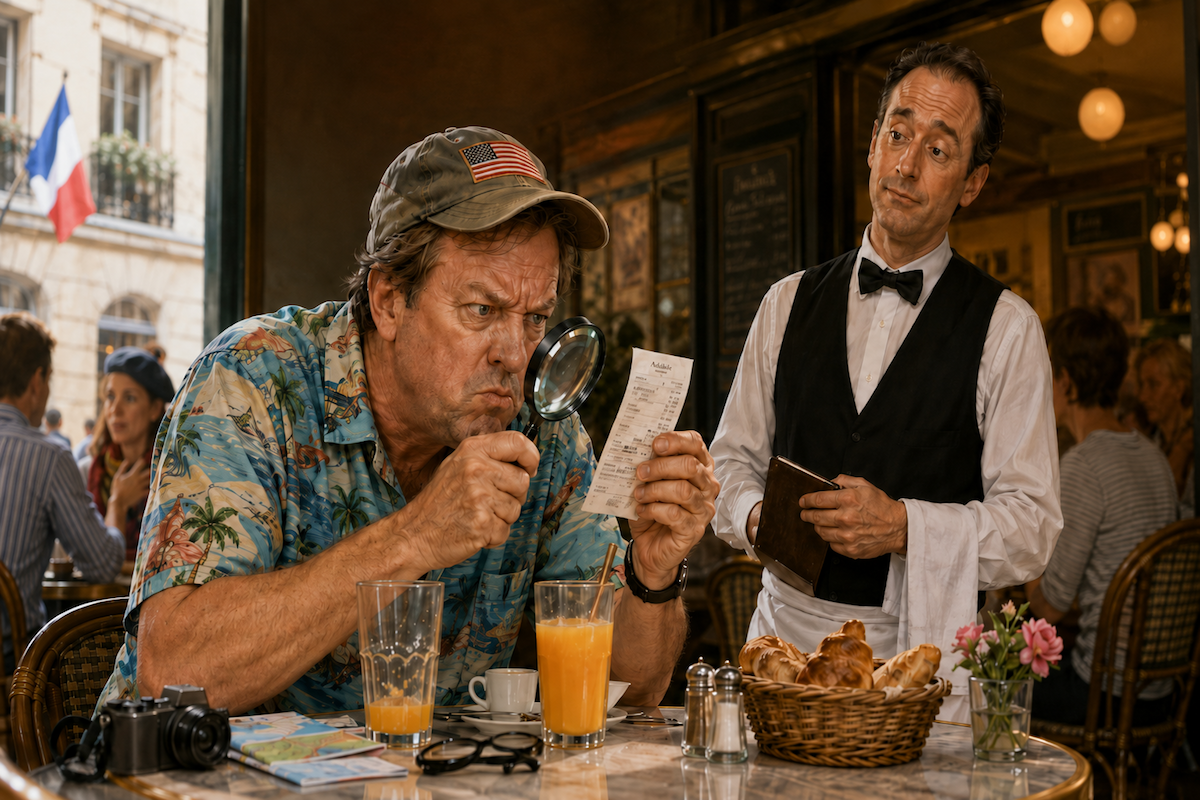
Years Abroad Sharpened My Scam Detector, and My American Assumptions Kept Setting It Off for All the Wrong Reasons…
By the time the guy finished explaining the price, I’d already convicted him.
I knew the routine.
An American walks in without knowing what things should cost and gets handed the “special price.”
I’d spent years abroad learning not to be that guy. I’d been overcharged before and heard enough scam stories to develop a sensitive bullshit detector whenever money and confusion showed up in the same room.
So I questioned the price. His explanation only made me more suspicious.
In my head, I was already congratulating myself for catching the whole thing.
There was one small problem.
He was right.
Once I understood what was happening, the price made perfect sense. It wouldn’t be the last time my hard-earned scam detector confidently identified a crime that existed in my own mind.
1. The Price Was So Ridiculous I Immediately Blamed It On the Foreigner Tax
In Ukraine, I once asked for a refill of juice and got a fresh glass. Fair enough, until the bill arrived and there it was again, another full charge.
My first reaction was predictable. Apparently, an American had ordered one juice and somehow paid for two. I started studying that little piece of paper like evidence for an international tribunal.
Then somebody explained the embarrassingly obvious part.
I hadn’t received a refill. I’d just ordered another juice.
Free refills were part of the invisible American rulebook I’d carried abroad with me. The restaurant hadn’t doubled my bill because I was a foreigner. I’d doubled my own order.
What I Missed: I thought I’d been charged twice for one drink. I’d actually ordered two using an American refill rule that didn’t exist there.
2. I Thought the French Bill Was Wrong, I Was Looking for the Tip.
France introduced me to another wonderful American pastime: staring suspiciously at a restaurant bill because I didn’t recognize what I was looking at.
Service was already built into the price, something I’d grown up treating as a separate decision at the end of a meal.
For a while, anything involving service and money felt like a potential extra charge. I was searching for somebody sneaking money onto my bill while carrying an American tipping system around in my head.
I even left extra money more than once because overpaying voluntarily felt safer than being cheated accidentally.
What I Missed: I wasn’t uncovering a mystery charge. I was trying to read a French bill through an American tipping system lens.
Sometimes though, your scam detector is right. Expat Life Gone Wrong ($4.99) takes you straight into the chaos with 10 fast-paced stories where life abroad really does go sideways.
3. I Handed My Fare to a Stranger and Watched It Disappear
My first encounters with Kyiv marshrutkas (public mini-buses and vans) required a level of financial trust I wasn’t emotionally prepared for. You climbed aboard, pulled out cash, and handed it to another passenger, who passed it forward.
Then your money traveled through the vehicle in the hands of complete strangers all the way to the driver.
I remember watching this happen and thinking, We’re just passing money around now? Nobody seemed concerned that somebody might quietly pocket a little transportation bonus.
Then the change came traveling back the same way.
Once I watched locals do it a few times, the strange system made perfect sense. Everyone already understood the routine.
What I Missed: I thought a payment system involving complete strangers couldn’t possibly be legit. I was the only person treating the ride fare like it had entered a black hole.
4. I Was Sure the Driver Was Taking Me for More Than a Ride
After a few years in Tbilisi, I’d ridden in enough taxis to develop opinions about the routes they took. Recognizing streets eventually convinced me I understood every route better than the guy driving the car.
One driver headed somewhere I wasn’t expecting, and my internal fraud department immediately opened a case. Every unfamiliar turn looked like another few lari being added to pad the fare.
I questioned him. He explained what was happening, and eventually we arrived exactly where we were going without the financial mugging I’d been rehearsing in my head.
The embarrassing part was that I’d spent almost four years in Georgia and barely spoke any Georgian. When English failed, I had to fall back on Russian, which felt especially awkward with 20 percent of the country still occupied by Russia.
After 20 years in Ukraine, Russian was the only language I had to fall back on in Georgia. It was enough to argue with a taxi driver, even when I probably shouldn’t have been arguing at all. Especially in the language of their occupier.
What I Missed: I knew enough of Tbilisi to recognize the streets. I’d turned that into believing I knew every reason a driver might choose a different route.
5. I Paid Full Price and Thought Half My Dinner Was Missing
The first time I ordered a meal in Spain and saw the portion, I thought something had gone wrong. I was paying full restaurant prices for a plate that looked like the kitchen had stopped halfway through assembling my dinner.
I felt like I’d paid for a full meal and received the abbreviated tourist special.
My American brain had a simple equation. Full price should produce a plate requiring a dolly to carry it to the table.
Nothing was missing.
That was the portion size.
People ate it, enjoyed it, and somehow survived the evening without needing an emergency drive thru run for a bag of fries.
Once I stopped measuring value by how much food could fit on a ceramic plate, the price stopped looking suspicious.
I also discovered the shocking possibility of leaving a restaurant without needing to be transported home on a stretcher.
What I Missed: Nobody had “shorted” my dinner. I was judging a Spanish meal by an American idea of how much food full price should buy.
6. The Kyiv Apartment Deal Looked Too Informal to Be Legit
One apartment arrangement in Kyiv set off nearly every scam alarm I’d developed abroad. It stayed informal, which helped keep the rent lower, but the official-looking paperwork I expected never materialized.
A local connection handled much of it. Cash changed hands. The whole thing felt far more casual than anything I would’ve had back home.
Instead of enjoying the lower rent, I kept waiting to discover why the deal had been such a terrible idea.
Surely a legitimate business required somebody to print something, stamp something, or at least produce a document thick enough to ruin my afternoon.
That moment never came.
The arrangement really was more informal than I was used to. I never learned to love deals like that, and plenty can go terribly wrong. This particular one wasn’t a scam though.
Actually, my landlady also happened to be the godmother of my girlfriend’s godmother.
What I Missed: I was treating unfamiliar paperwork standards as evidence of dishonesty.
7. I Was So Sure I’d Caught the Scam That I Made Myself the Problem
France gave me one of my better lessons in righteous indignation at an airport. My flight was scheduled for 10:30, and I reached the gate around 10:10 feeling reasonably responsible for once.
The gate was closed. My seat was gone. My bag had somehow managed to continue its European vacation without me.
I was furious.
From my perspective, the airline had sold me a seat on a 10:30 flight and refused to let me board twenty minutes before departure.
Then came the detail I should’ve noticed earlier.
The gate had closed at 10:00.
Departure time and gate closing time were two different things, and I’d ignored the one that actually controlled whether my ass got onto the airplane.
The airline hadn’t stolen my seat. I’d arrived ten minutes late to something I thought I was twenty minutes early for.
What I Missed: I thought 10:30 was the deadline that mattered. I’d been confidently watching the wrong clock.
I Got Harder to Fool. I Also Got Better at Fooling Myself
Years abroad really did make me harder to rip off. I learned to question prices and pay closer attention to what was happening around me.
Experience also made me very confident in my own bullshit detector.
That confidence occasionally became the problem.
The longer you’ve been abroad, the easier it becomes to believe you’ve finally cracked the code. Then somebody hands you a bill or takes an unfamiliar street, and suddenly you’re a beginner again.
I’ve learned to leave a little room for that possibility.
Sometimes the most dangerous sentence in my head has been, “I know exactly what’s going on here.”
Have you ever been absolutely convinced somebody was ripping you off abroad, only to discover you’d misunderstood the whole thing?
Share the embarrassing version in the comments. Those are usually the best stories anyway.
Ready for some stories where life abroad really did go wrong? Expat Life Gone Wrong ($4.99) serves up scams, booze and spectacularly bad decisions you won’t find on Instagram.
The article ends here. Thanks for reading!
The Expat Backroom begins here in the Substack version. That’s where I make the harder call. When does being too suspicious become almost as dangerous as being too trusting?


David Peluchette is a Premium Ghostwriter/Travel and Tech Enthusiast. When David isn’t writing he enjoys traveling, learning new languages, fitness, hiking and going on long walks (did the 550 mile Camino de Santiago, not once but twice!), cooking, eating, reading and building niche websites with WordPress.